VAASTU YOGA
Vastu-Dosha's and Remedies

Vaastu-Dosha's and Yogic Remedies
In Vaastushastra every Vaastu is considered to be a living entity. Almost all the principles of Vaastushastra can be traced to Yogashastra vision and practice, hence primarily Yogashastra is the foundation of Vaastushastra. As in traditional Indian dharma' five elements such as Air, Water, Earth, Fire and Wind collectively called as Panch-Maha-Bhutas are importantly considered in Vaastushastra. Their individual qualities and effects in our daily lives are utilized to add the quality to our lives.
The Sun and the Moon which are considered important aspects in astrology, reflected in Vaastushastra as two-stream theory, The "sun stream" and the"moon stream".
The "sun stream", an old theology gives prosperity, peace in our lives. These aspects lies mainly in the North and East directions.
Another stream the "moon stream" is associated with pain, hardship, misfortune, sorrow and is considered unfavorable to life. It has control over the South and West directions.
vaastu-dosha is a projected flaw or deficiency in the known characteristics of the eight directions. These directions have been endowed with qualities based on a classification sourced from the Panch-Maha-Bhutas. Vaastu-dosha implies souring of qualities of the directions under consideration. In turn, Vaastu-dosha is closely associated with the Panch-Maha-Bhutas related qualities of human body, mind and soul. Through 'Sadhana' or meditation, one can incorporate Panch-Maha-Bhutas related qualities of the directions in the human persona. On a microscopic level, these qualities can provide a shield emanating from the soul that can protect the person from ill effects of Vaastu-doshas. This idea is particularly effective when human efforts found to be wanting on account of obstructions created by Vaastu-doshas need additional propellant.
Indian Darshanshastra and spiritual disciplines describe many a mediation practices or 'Sadhana' that can serve this very purpose. In this modem era, innovative meditation techniques, which are essentially offshoots of ancient practices, are gaining popularity. Although all these meditation techniques see salvation' as the final goal, the virtues experienced by human mind and body vary according to the characteristics of the specific methods. These subtleties in qualities and characteristics can be utilized as a form of Yogic remedy on Vaastu-dosha.
As we've traveled from the stone age to the evolution the revolution and now the millennium era, we've known lately about the values of minerals, which revamp our lost vitamins and necessary salts in our body. In Hindu tradition for any shubh (Holy) occasion cow's urine (gomutra') is sprinkled, Now, considering it as not only as it's rich tradition but it also has it's scientific importance, cow's urine contains salts and minerals which have a great medicinal values.
For instance if any in any house there has been trouble maintaining harmony between husband and wife or may be the money earned does not last long, This is certainly a Vaastu defect; If only it has to stop, maybe by removing that expensive paintings of a shipwreck or a mythological portrait of "Mahabharata" or a setting sun....otherwise it is always
The Panch-Maha-Bhutas concepts associate Vaastu-dosha with the four basic elements - Earth (Prithvi), Water (Jal), Fire (Tej), and Wind (Vayu). Since the fifth element, Ether (Akash), is the most subtle and fundamental 'MahaBhutas', it is said that 'one who wins control over 'Akash-tatva' is not affected by the ill effects of 'dosha' (deficiency) in the Prithvi, Jal, Tej, and Vayu elements. The spiritual paths of enlightenment in a way focus on conquering the 'Akash-tatva'. As such, a personal shield against effects of Vaastu-dosha can be attained through spiritual regimens. The 'Siddha Purushas' or the 'Enlightened' are not touched by any kind of Vaastu-dosha. They conquer the mind and the 'self' and in the process cross the barriers of 'Mana' (mind), 'Pavan' (wind), and 'Gagan' (ether) to establish control over the dominions of Nature and God.
Once the mind is brought under control through 'Sadhana' (meditation), it frees itself from the shackles of space-time or in effect, from the influences of Vaastu-dosha. The present day ownership-flat culture cannot guarantee layouts designed as per Vaastu principles or provide amiable Vastu domain. Despite a difficult Vaastu situation, a happy and contented life can be made possible through the Yogic and spiritual practices.
All types of Sadhana are powerful enough to transport the Mana (mind) to Gagan (ether). But, by correlating the self-evident virtues and direction related dosha (deficiency), certain Sadhanas have been prescribed to match with specific directional aspects.
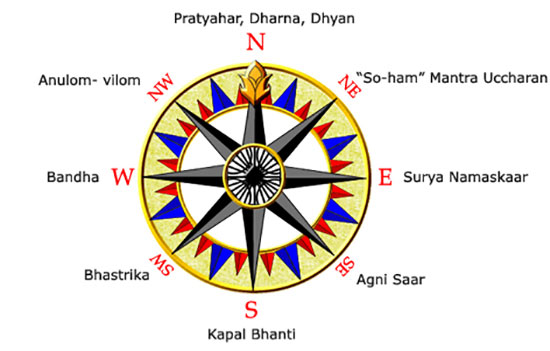
Table for Preferred Rituals for Specific Directions
Deficient Direction |
Vidhi (Ritual) or Remedial Action |
East |
Arghyadan |
Southeast |
Yagna-yag |
South |
Sudarshan Kriya |
Southwest & West |
Reiki, Sun Worship Yoga-Diksha, Shaktipat |
Northwest |
Pranayama |
North |
Vipasana |
Northeast |
Soham Sadhana |
Let us first consider the East direction
Arghyadan
A Vaastu not receiving benefit of Aditya Pravah due to polluted East direction develops Vaastu-dosha. Aditya Pravah is closely related with Brahma Muhurta. The concept of deficiency in the East direction implies deprivation of life-sustaining energies at the sunrise. As such, the traditional invocation of the Sun and Arghyadan is the best antidote on this type of Vaastu-dosha.
The ritual of Arghyadan performed with water is associated with Mantra, Nainaskara, Vajrasana, and Pranayama. The practice commences with cupping of water in hands and offering it to the Goddess Sun in a ritualistic manner at the predawn hours. The fingers, the palms, the arms are bestowed with the power of the Sun if one performs Arghyadan daily.
Chinese acupressure technique also alms at recharging Pranik energy flow in the body through some nodal points on the palm. The focal point of spiraling energies in human body is located on the human palm itself. These centres receive cosmic energies in the process of Arghyadan. The recitation of Bee' Mantras in Suryopasana (worshipping the Sun), the flow of Aditya Shakti in Arghyadan, and the Nadi Shodhan (purification of energy channels in body) in Pranayama initiates diffusion of Pran Shakti throughout the mind, intellect, and body to protect the person from any ill-effects of Vaastu-dosha. Traditionally, Arghyadan is performed at early morning and evening twilight hours.
Not withstanding the fast paced current lifestyle, it is still possible to perform Arghyadan for 15 - 20 minutes daily on the terrace of a house to avail of remission from the flaws attributed to the polluted East direction.
Homa-Havan - The Fire Worship
The imperfections in the Southeast direction are related to the anomalous combination of pollutants with the Agni Tatva (fire element). Traditionally proven Vaishvadev Yag Havan rituals aid in subsiding these flaws. The two types of Havan Vidhi (rituals) -customary (Nitya) and occasional (Naimittik) - performed with prescribed Mantras, burning of specific plants and shrubs in the divine fire, Pranayama, Viniyog Nyas and Dhyana create channels for circulation of Pran Shakti in the mind, body, intellect, and the Vaastu. Realizing the importance of these processes, our tradition has incorporated many such routines like Udak Shanti, Graha Shanti etc... spread over one's lifetime.
In modern times, positive changes brought about in the immediate environment through Havan have become a subject for scientific exploration. In Vedic culture, Havan is of utmost importance in all the rituals, religious ceremonies, and festivals. Symbolically, Agni or the fire is considered as mouth of the Divinity. In Havan, medicinal shrubs and plants are consigned to the flames through Ahuti and Samidha. The Yagna concepts refer to Ashtadisha (eight directions), Ashtadikpal (custodians of the eight directions) and other entities representing some thirty-three energy forms. The layout of the Yagnakunda (sacrificial altar) is in itself a distinct form of Vaastushastra and its symbolic energy correlation is rather mysterious. The rituals include occult Chakras, colours, plants, shape of the altar, symbolic Goddess energy correlation, circulation of Prana through Panch-koshas in Nyas- Vidhi, Muhurta, Yama-Niyaina specified rhythmic recitation of Mantras, Arghyadan and finally the cosmic outlook in All these processes working at divine, earthly, and spiritual levels purify the mind, the soul, the intellect, the egoist self and the body.
Even in modem times, this ancient mystic practice retains it's identity in Kanyakumari Ashram at Sakori near Shird. The great philosopher saint Shri Upasani Maharaj rejuvenated this ancient tradition by bestowing the knowledge and rights for Vedic rituals on his female disciples. In the later years, the knowledge about this Yagnic tradition was propagated throughout the world by his disciple Shri Godavari MataJi.
Sudarshan Kriya
A Vaastu having predominant flaws associated with its Southern direction, is subjected to the Yama Tandava of the solar energies. Such a house, all the time faces unforeseen and mysterious calamities. The South direction is closely associated with the tenth house of a natural horoscope. Tenth house is a Karma Sthan indicative of business, employment, and paternal protection. The seventh house of a horoscope is associated with marriage. As such the tenth house, because of its fourth position from the marriage house, indicates conjugal bliss. Therefore, difficulties in marriage are invariably linked with deficiencies of the South direction. The Jaivik effects of the southern Vaastu-dosha persist long after the dosha is terminated. Sudarshan Kriya propounded by the great philosopher and Yogi of modem era, Shri Shri Ravishanker is very effective in countering ill effects of Vaastu-dosha in the South direction.
The Sudarshan Kriyas procedure produces immediate observable constructive influences on the mind, the soul, the intellect, the egoist self, and the body. This initiates smooth circulation of the divine Pranik energy in the body, making it resistant to the effects of any Vaastu-dosha. This Yogic practice includes the fundamentals of Dhyan, Pranayama, Soham Sadhana, and Patanjali Yoga. The Nadi Shodhan as proposed by Shri Adi Shankaracharya is easily achieved in this Kriya. In the Japdhyan Kriya, after chanting 1,00,000 counts the Jap takes microscopic form in its traverse from the Vaikhari to Nabhi. But, in Sudarshan Kriya the Japdhyan accelerates towards the Nabhi Chakra, as the rhythmic pace of the Prana in a sense merges the three states - Mana, Pavan, and Gagan. In such a state, the Sadhak may immediately undergo experiences like stillness of mind, unconsciousness, deep Yogic sleep, recollection of previous birth, or extreme sense of happiness. Generally, this process simulates the action of Pingala Pranayama, and as such, it is essential that the Sadhak rests himself on the right side of his body after the main Kriya to set the Ida current in motion before terminating the Kriya.
Vaastushastra and Yogashastra are closely connected with the Northeast and the Southwest directions through Ida and Pingala current flow characteristics. Therefore, the Sudarshan Kriya, which simulates Pingala Pranayama, is one of the best antidotes against polluted South direction.
Shaktipat Yoga Diksha and Reiki
For the Vaastu-dosha related to the Southwest direction, it is seen that the incidents taking place in the life of the owner of the Vaastu are closely linked with the eighth house in his horoscope, In a sense his personality is annihilated in so many ways through these events. Thinking of even a remedial measure is sometimes beyond the scope and ambit of such a person. In such cases, help indeed is available through a Diksha similar to Shaktipat Diksha, in which Pranik energy circulates through the human mind, intellect, and body under the guidance and control of a Guru or the Master. At appropriate time, counseling and teachings of the Guru smoothly initiate in the Mana, Chitta, and Buddhi Koshas of the disciple, the processes of Kundalini Jagaran (awakening the Kundalini) to Chakrabhedan Kriya (passage through the Chakra). Maharashtra is blessed with outstanding Saint figures with powers to channelise Pranik energy flow through Shaktipat Diksha - Shri Gulavani Maharaj and Shri Muktananda in the immediate past, and Shri Malharibaba of Chandrapur, and Shri Chitvilasnanda of Vajreshwari in the present era. They have been using these powers in a constructive manner. The thoughts and wishes of the Satguru can automatically catalyze many a Yogic Kriya in the disciple to ease the circulation of the Pranik energy flow and smoothening of the difficult tasks like Yama-Niyama.
Reiki a Japanese meditation practice is very popular nowadays. Reiki can also be classified as a type of Shaktipat Yoga. Reiki involves circulation of motherly tender touch, mother and child dialogue, and motherly yogic processes in the Mana, Chitta, and Buddhi Koshas of the Sadhak to take him to a higher dimension of consciousness. In Reiki treatment, positive thoughts and wishes of a person and his mental attitude brings about flow of cosmic energy through the Panch-koshas of the patient or the personality suffering difficulties in life. It is possible to simulate Reiki-like Yoganidra type energy channeling through the use of Hindu symbols like Aum, Swastika, Lotus, Mantrabeej etc..
Transcendental Meditation
Maharshi Mahesh Yogi has developed the yogic discipline of Transcendental Meditation. This yogic line of Sadhana uses many a practices from the ancient Patanjali Yoga, interwoven with insight of modern psychology. The technique alms at achieving happiness in day to day life by managing the entire day through the precepts of yogic philosophy. For the present day stressful lifestyles governed by hurry, curry, and worry, this yogic style has its own importance.
Vaastu-dosha associated with the West direction point towards split personality, impatient and undisciplined mental makeup. As such, Transcendental Meditation provides the right balance and discipline in routine life to counter the ill effects of deficiencies in the West direction.
Pranayama and Yogasana
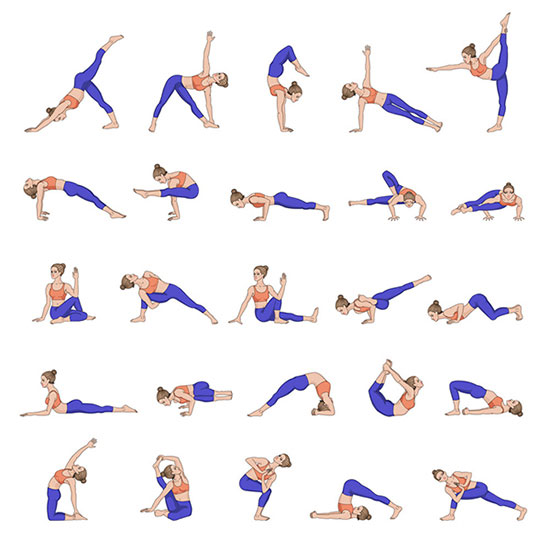
Vaastu-dosha originating from flaws in the Northwest direction generally result in disturbed mental state of the owner and the decision-making capacity of the person somehow gets neutralized by extraneous circumstances. We must note that, Northwest is controlled by the Vayu-Tatva (element wind) and Pran in fact is a manifestation of Vayu in the form of breath. Hence, in the Northwest type Vaastu-dosha, the Yogasanas controlling the breathing and Pran are very important. As it is, Yogasanas and Pranayama are closely interwoven. Regular practice of Yogasanas makes a person aware of the sensation of Pran in the vicinity of the Nabhi-Chakra. Nabhi is also known as the dormant brain. Nabhi, in fact, is a source of all the energy forms in the body. The movement of Pran towards the remote Nabhi-Chakra proves a constructive influence on the Mana, Chitta, and Buddhi. This rejuvenating and invigorating Yogashakti can overcome all types of doshas or drawbacks in life.
Even the Chinese Yogic philosophy considers Nabhi Pranayam as an important aspect of Yogic practice. Breathing technique of infants and young children involves in and out movement of stomach. The relevance of this natural movement in inhalation and exhalation, and in general, for deep and sustained breathing is well understood in Chinese Yogic practice.
In the Indian Astang Yoga the Asanas body postures and rhythmic movement of the body automatically inculcate the deep breathing techniques in the Sadhak.
Vipasana
Vipasana is basically a Dhyan technique derived from Buddha Dharma practices. It is similar to the Neti-Neti Tratak Bhrumadhya and other Dhyan procedures in Indian Yogashastra. The essence of Vipasana practice lies in achieving the Turiya , the fourth state of consciousness by remaining inactive witness to the transitions taking place in the surroundings. Turiya is a state of mind beyond Jagruti , Swapna and Sushupti but at microscopic level its presence is noted in all the three states. Vipasana takes the Sadhak towards Turiya through Layayog and Swaryog.
Vaastu-dosha in the North direction generally implies heart troubles. This direction is associated with the fourth house in a horoscope, and with Jaivik Urja in Vaastushastra.
In the Chinese acupuncture technique, it is assumed that the energy contours for senses define circular Chakra type path in the body. In Vipasana concentrated power of the mind is focused on various Bindus or points in the body and on different parts of the body in a sequential manner. Acupuncture technique aims at inducing revitalizing vibrations in biochemical processes by applying pressure on specific points on Chakra-shaped energy contours. Similar effect is achieved in Vipasana by making use of subtle energies of mind and senses in the process of meditation.
Taking up a role of a non-interacting witness, constantly watching the inner and outer movements of the breathing process is the backbone of Vipasana technique. The experience can best be described in words of Sant Dyaneshwar: (it's speed is simply incomparable, it has even outpaced the mind itself). The Dhyan technique of observing the self by becoming inactive witness finds references in Nath-Pantha (MPM sect also. The sect in fact describes the all encompassing Vipasana through the couplets like; Yogashastra postulates: (life-force is located at the point where the mind is focused). Layayog and its spherical vibrations of sensation cleanse the entire body by attaining the necessary concentration of mind.
Soham Sadhana
Soham Sadhana incorporates Sadhana techniques like Pranayama, Swaryog Tratak , Sakshibhav, Pranav Sadhana and Sudarshan Kriya
It is basically the Rajyoga Diksha prescribed by the Nath sect. This Sadhana has a set pattern - Bhasrika, Aumkar Uccharan, Ujjayi Shwasan and then constant observation of the self without active participation. By watching the slow moving rhythm of the breathing process, the mind is brought under control. Soham Sadhana is the art of experiencing the formless Gagan and imbibing its essence by making the Mana (mind) ride the chariot of Pavan.
This Dhyana technique is most effective on the Vaastu-dosha associated with Northeast direction, which affects the sources of positive energy flow. The Northeast directional deficiencies produce detrimental effects matching in intensity to those originating from the Vaastu-dosha in the Southwest direction. As such, Soham Sadhana, which derives its strength from all the Yoga disciplines is beneficial as a remedy against Vaastu-dosha in the Northeast direction.
Soham Sadhana vanquishes the Doshas related to the four basic elements - Prithvi, Aap, Tej, and Vayu - by focusing sublime qualities of the element Gagan on the mind.
Bhasrika removes the bad habits like laziness and sleepiness in the Sadhak, facilitating Nadi-Shodhan (refining the Nadi). Pranav-Ucchar awakens the senses in the deep confines of the inner Pran-Kosha. Ujjayi Shwasan creates a link between natural Soham reaction and the individual breathing process. This in turn constructs a bridge to Pinda-Brahma, which is essential for smooth passage of the Pran Shakti. Then, the dormant Mana (mind) can easily ascend to the Gagan.
Since Soham Sadhana is a ritual suited for Rajyoga, it. is smooth, easy, and safe. In Maharashtra this Sadhana has been rejuvenated through the efforts of Shri Swarupananda, Shri Madhavnath, and Shri Yoginitai.
This article discussed the relevance of different yogic practices for pacifying the mind and body subjected to ill effects brought about by flaws in qualities of Vaastu directions. 'the benefits of the above yogic disciplines are manifold. An individual not only achieves stability of mind and mental peace, his body and mind develop the strength to successfully counter the ill effects of direction related Vaastu-dosha. Thus, he is blessed with a cosmic protective shield.

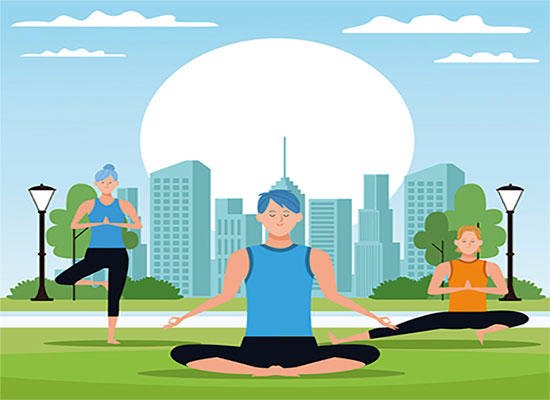
Er. Rameshwar Prasad invites you to the Wonderful World of Vaastu Yoga
Engineer Rameshwar Prasad(B.Tech., M.Tech., P.G.D.C.A., P.G.D.M.) Vaastu International
|