VASTU ARCHITECTURE
Colonial Architecture
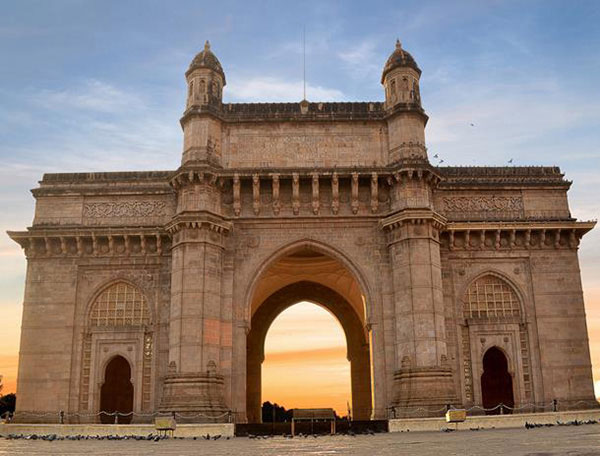
Like all other aspects, colonization of Indian also had an impact on architecture style. With colonization, a new chapter in Indian architecture began. The Dutch, Portuguese and the French made their presence felt through their buildings but it was the English who had a lasting impact on architecture. In the beginning of the colonial rule there were attempts at creating authority through classical prototypes. In its later phase the colonial architecture culminated into what is called the Indo-Saracenic architecture.
The Indo-Saracenic architecture combined the features of Hindu, Islamic and western elements. The colonial architecture exhibited itself through institutional, civic and utilitarian buildings such as post offices, railway stations, rest houses and government buildings. Such buildings began to be built in large numbers over the whole empire. Colonial architecture in India followed developments not only from metropolis but also took inspiration from existing architecture in India.
From the mid nineteenth century it became a norm for the Anglo-Indian church builders to follow the model set by the revivers of the many combinations of Gothic in England. In many cases imperialism was the sole guiding force rather than practicality. On many occasions heavier styles than Gothic were employed. This can be seen in the Mutiny Memorial Church at Kanpur and the last garrison church in New Delhi.
The Italian Gothic was seen to be well adapted to conditions in India. The architecture style recommended by Sir Gilbert Scott for Bombay University proved crucial in making the colonial architecture look more 'Indian'. Perhaps this was the beginning of a truly imperial style that reached its apex at New Delhi. The great public building campaign launched in Bombay in the second half of the nineteenth also resulted into great development of colonial architecture. In this phase Sir Gilbert Scott's buildings were significant products. Other remarkable landmarks produced during this phase were William Emerson's Crawford Market, the Bombay high court and the Victoria terminus (now Shivaji terminus).
The Victoria Terminus, once the headquarters of the Great Indian Peninsular Railway, was the culminating masterpiece of the phase. It was increasingly hybrid in style. The Classical and Baroque style furthered the innovation in architecture. Its best exponent was Walter Carnville's Calcutta General Post Office. The innovation in colonial architecture did not stop here; in Victoria Memorial, William Emerson tried to emulate the Taj Mahal in material if not in form. This was an indication of 'Indo-Saracenic' hybridization and was being increasingly employed at different places like St. John's College, Agra and the Madras High Court, Madras.
From the time the East India Company’s first envoy stepped into India during Jahangir’s rule in 1616 to the time they left in 1947.

British Style of Architecture
The British followed various architectural styles Gothic, Imperial, Christian, English Renaissance and Victorian being the essentials. Bombay, a forgotten port because of its weather, was renovated after the Sepoy Mutiny in 1857. The town hall, built from 1820 to 1835 by Colonel Thomas Cowper and St Thomas’ Cathedral were already there, but Governor Sir Bartle Frere’s aim was to build a city out of fragments. The old town walls were broken down, and the Gateway of India (through which the last British troops left) was built.
The idea was definitely Gothic, to give Bombay a truly Imperial ambience. The Secretariat, University Library, Rajabai Tower, the Law Courts, Public Works office, Telegraph office, Victoria Terminus all followed the Victorian Gothic style, similar to buildings in London.
Built during 1878 and 1887, the Victoria Terminus, or VT as it is fondly called, is the finest example of Gothic architecture in India. Its architect was Frederick Willaim Stevens, an unknown in England, who married marble, decorated tiles, stained glass, metal, concrete and bricks in a fusion which never happened again. High above the huge stairway inside a massive dome looms up as statement of Imperial progress in all its glory. The entrance is flanked by symbolic sentinels of the Raj, a tiger and a lion. Stevens was a practitioner of Victorian Gothic architecture and also designed the Churchgate Terminus. But Stevens’ Municipal Building opposite the Victoria Terminus with the intermingling of Gothic and Indo-Saracenic architecture stands as the final testament of his brilliance, unsurpassed in British India. Built from 1888 to 1893, the Building is a massive conglomeration of masonry crowned with a true Islamic dome.
British Gothic Architecture
Across India Gothic architecture flourished under the British. In Varanasi, one of the true Gothic monuments is Queen’s College, built in a perpendicular style by Major Kitoe from 1847 to 1852. In nearby Allahabad, the British went on a rampage, building a series of edifices which include the colossal University, All Saints Cathedral, the High Court and Mayo College (now a sports association called Mayo Hall). In the east in Calcutta a High Court was erected on the Gothic style. All Saints Church in Nagpur was redesigned, the plans being sent to India from England by G F Bodley.
But it is Calcutta that takes the architectural cake. Who can forget the massive Howrah Bridge, finished in 1943 to replace a pontoon bridge built in 1874? The Bridge spans 1,500 feet, leading to Howrah Station whose red brick facade is surrounded by eight square towers in the Oriental and Roman style. 1880’s Writer’s Building was refaced with terracotta and conceals an earlier structure which were the mercantile headquarters of the East India Company. Fort William, the stronghold of the British in mid 19th century, took 13 years to construct at a cost of more than $3.5 million.
The Magnificent Victorial Memorial
The Victoria Memorial (1921) is probably the most imposing of all British structures in India. Located at a short distance from Fort William, it stands as a silent sentinel of the departed Raj, dominating the entire city by its sheer beauty. Dedicated to Queen Victoria, is rises up behind two ornamental tanks leading from a pathway featuring a statue of the Queen. The entire exterior of this massive edifice is in Makrana marble, the same which was used to build the Taj Mahal in Agra. A 16 feet bronze statue of Victory, weighing three tons, revolves in the uppermost section of the building. The domes around the corners resemble those of the Mughals, and the south has a triumphant archway where a statue of Lord Curzon, the architect, is placed. The interior has statues of the young Queen Victoria, representing her accession to the throne along with bronze and marble statues and busts of King George V and Queen Mary. A succession of rooms follow which house paintings, artifacts, sculptors, books and manuscripts.

The Indo-Saracenic style of Architecture
Towards the end of the 19th century, the Victorian Indo-Saracenic style came to the forefront. Rising Indian nationalism prompted the revival of this style, and the British began to adapt their image to mingle with that of Indians. Victorian in essence, it borrowed from the Islamic style of Mughal and Afghan rulers, perhaps as a subtle statement that the British were the real powers behind the princely states.
The Indo-Saracenic style was Indian on the outside and British inside; the facade built with an Indian touch while the interior was solely Victorian. Madras (now known as Chennai) is home for some finest masterpieces of this style, like the Law Courts, Presidency College and Senate House. The Law Courts especially stand out for their grandeur in a splendid rendezvous of Muslim domes, canopied balconies, arcaded verandahs all topped off with a minaret at whose pinnacle is a bulbous dome. In Mysore, the Maharaja’s palace was designed on the lines of the Madras Courts, with a dome and minarets.
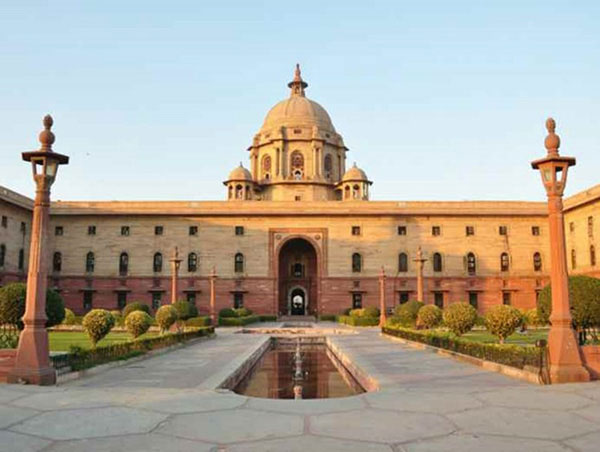
Colonial Architecture Splendor At New Delhi
New Delhi is a city made by the British, not the Mughals. In 1911 the King Emperor George V passed an order declaring that the capital would be moved from Calcutta to Delhi.
The city was planned systematically, combining 20th century architecture with that of two centuries before. Sir Edward Lutyens was responsible for the overall plan of Delhi, and his tour de forte is Rajpath, approached by a 3.2km long road flanked by the imposing buildings of the two Secretariats, built by Herbert Baker. The Rashtrapati Bhawan, built of brown stone, is truly a befitting home for the President of the second largest democracy in the world.

But it wasn’t Lutyens or Bakers who built the rest of Delhi as is commonly believed; most if its structures were designed by an unknown Englishman called Robert Tor Tussell, who built Connaught Place, Eastern and Western Courts, Flagstaff House (where Jawaharlal Nehru lived later) and the thousands of public buildings, post offices, officer’s bungalows and public buildings. St Martin’s Garrison Church is the final British piece of architecture, one of the most important ones because it represents the end of a search for an definitive style over 200 years. Looming out of the ground and made of three and a half million red bricks, the Church is a huge monolith with a high square tower and deeply sunken window ledges reminiscent of Dutch and German architecture.
With India’s independence in 1947, British architecture died a gradual death, especially after the new city of Chandigarh was completed by Le Corbusier and his English colleagues.
Er. Rameshwar Prasad invites you to the Wonderful World of Vastu Architecture
Engineer Rameshwar Prasad(B.Tech., M.Tech., P.G.D.C.A., P.G.D.M.) Vaastu International
|