ASTROLOGY
Nine Grahas (Planets)
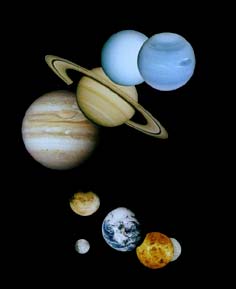
Jyotish or Vedic Astrology uses 9 Grahas (planets) in the chart analysis :
- The Sun (Surya or Ravi)
- Moon (Chandra Sandu)
- Mars (Mangal or Kuja)
- Mercury (Bhudha)
- Jupiter (Guru or Brhaspathi)
- Venus (Shukra or Sikuru)
- Saturn (Shani or Senasuru)
- Northern Lunar Node (Rahu)
- Southern Lunar Node (Ketu)
The Sanskrit word "Graha" is often taken as the equivalent of the English word planet. This is a very simplistic translation which hides the deeper meaning of this word. "Graha" refers to an entity that has the power to "seize, lay hold of, or grasp". Therefore, Graha means “to grasp” meaning the planets possess, or take hold of us. This meaning is intimately related to the meaning of the nakshatras (also called lunar mansions, or a 27-fold division of the zodiac), which are described in similar terms.
Graha therefore goes beyond the word planet and describes the ability of celestial events to either influence or predict occurrences on earth. This aspect is the fundamental reason that astrology is not accepted by the scientific community, as this connection has no known physical basis. We prefers to use the word “Graha” instead of planet because it conveys this deeper meaning. Besides, using the word planet would not be technically correct. The nine Grahas (“Planets”) are called Surya / Ravi (the Sun), Chandra / Sandu (the Moon), Mangal / Kuja (Mars), Budha (Mercury), Guru / Brahpathi (Jupiter), Shukra / Sikuru (Venus), Shani / Senasuru (Saturn), Rahu (Northern lunar node and Ketu (Southern lunar node). The Sun is not a planet, it is a star. Rahu and Ketu are not planets, and indeed do not even represent physical entities.
The Grahas are divided into two groups, according to their general auspicious and inauspicious nature. The Sanskrit terms used to name these two groups are “Saumya” or benefic and “Krura" or malefic. The Waxing Moon, Mercury, Jupiter and Venus are known as benefices. The Sun, Saturn, Mars, Waning Moon, Rahu and Ketu are classified as malefic.
The nine planets (seven planets and the lunar nodes) have specific meanings, and significations. The planetary rays manifest in various ways in our lives. A planet rules each life experience and different stages of our lives. They are the key indicators of people and different attributes or qualities we have. Understanding the true significations of the planets in our lives will bring a higher consciousness, releasing us from their grasp or hold on us.
Rahu, Ketu, and the Planets influence each other in various ways. The ancient sages saw a relationship between the movement of the planets and the ups and downs of human experience. Vedic Astrology explores these variations in order to help us anticipate challenges and comprehend their meaning.
Two planets in the same sign are conjunct. Planets in sign opposition are said to aspect each other. Mars, Jupiter and Saturn have special additional aspects. The sign in which a planet is located is of great importance. If the sign is favourable to the planet, the qualities of the planet are expressed more strongly and auspiciously. The person in question will enjoy more benefits in different areas of life that are signified by the planets. Contrary, if the sign is very unfavourable, the planet will turn inauspicious and may bring problems and struggle in whatever area of life it represents.
We calculates all of these influences and many more. Our Astrologers have the ability to calculate and analyse all of the complex influences of the planets and then present them to you in ordinary language (Interpretations).

Keywords: Soul's energy, Confidence, consistency, Power,Self-growth and development, Ego, Father

One of it's names is Aditya ("first born"). It is also called Bhutasya Jatah (creator or father of all bhutas, i.e., objects and ingredients from which objects assume form). He is the ruler of all the planets. The Sun represents the male or father principle.
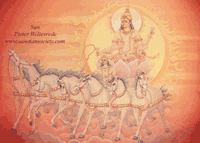
The Sun is the centre of the Solar System of planets used in Vedic Astrology. Therefore the Sun rules all types of central things such as the central government, the centrally powerful person in an organization, and so forth. In ourselves, the Sun rules our centre, which is our soul. The Sun is the source of light for all other planets and beings, so the Sun rules in astrology our centre of energy. As the source of energy in the Universe, so from the Sun's placement in our charts we judge our level of energy.
The Sun represents the soul, the ego and the body of the individual, and therefore its placement is of great importance. The Sun is best placed in Mesha (Aries) where it is called exalted. Opposite from there, in Tula (Libra) it is least auspicious and called debilitated. The sun is Lord of the sign Simha (Leo) and also of the house where Simha is located.
Sun signifies: Atma-Self, masculine, future, soul, physical body and health, heart, life force, courage, ambitions, pride, dignity, ego, vitality, will power, stamina, sense of self, power, fame, life, health, sovereignty and clothes, glory, inspiration, creativity, leadership, Father, teachers, authority, law and order, bosses, political leader, Kings or Presidents. It has anger but momentary. It’s element is gold. East is represented by sun.
Medical Astrology: Heart, blindness, baldness, right eye, headaches
Gemstone: Ruby, Red Garnet
Day: Sunday
Rules: Leo Exaltation: Aries Debilitation: Libra
Directional Strength: Tenth House
Remedies For SUN
1. Chanting of “Om ghrahini Surya Aditya Om” mantra. Must do at least 108 times.
2. Wear a gemstone or copper ring. You can do it for one hour from sunrise on Sunday morning, by purifying it with panchamrit in gold/copper, on the ring finger.
3. Do hawan from shveta arka (white extract) on Sunday.
4. Don’t eat salty and oily things on Sunday. Avoid both the things for some time.
5. Donate salt, butter, red cloth, red flower, and copper plate.
6. Keep fast on Sunday.
7. Read aditya hridya strotra (आदित्य ह्रदय स्त्रोत).
8. Serve your father.
9. Wear Surya yantra in siddhi yoga on Sunday.
10. Give jaggery and wheat to bull on Sunday.
11. Donate anise (Saunf), dates and sugar.
12. Donate almonds and coconut in pilgrimages.
13. Suppress seven square copper plates in the sand on Sunday.
Keywords: Peace of mind, connection or neglect, other people, the public, Mother, nurturing
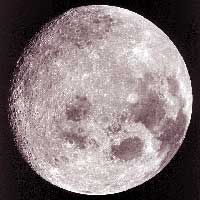
The famous Vedic verse Purusha Sukta, describing the cosmic man, states, "chandrama manso jatah": "Moon was born from the mind of the cosmic man," i.e., Virat Purusa, or Kal Purusa.
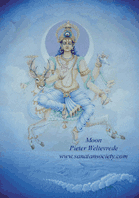
The Moon is close to us, and reflects the light of the Sun. The Moon is the most visible planet of all, to us here on Earth, because we can look at it so easily. It neither burns our eyes, nor hides in the deep darkness of space, like the others. Rather, the Moon is up close and personal, showing herself fully to us. The Moon is indeed very dear, close, and friendly. It's light is very nice and pleasing. Her full bodily lustre each month is a rising sight to see. Unlike Western Astrology where the Sun is most important, in Jyotish the Moon is the first “Graha” to look at and plays a central role in many calculations and predictive techniques.
The Moon rules the mind, the emotions, feelings, nursing, nurturing, mothering and the overall life of the person. An afflicted Moon greatly shapes the personality in the direction of the affliction, whether it is harshness of character, sadness of mind, or an angry and aggressive nature. Similarly, benefic influences upon the Moon in a chart, or a well placed Moon we could also say, bestows the reflections of helpfulness, peace of mind, cleanliness all around, and so forth.
The Moon is best placed in the first few degrees of Vrishabha (Taurus) where it is called exalted. Opposite from there, in Vrishika (Scorpio) it is least auspicious and called debilitated. The Moon is lord of the sign Katrka (Cancer) and also of the house where Cancer is located.
Moon signifies: It is a cold, calm and quiet planet and represents mind, reflective, feminine, night, emotions, sensitivity, nurturing, security, past, past-lives, patterns of behaviour, receptivity, caring for others, heredity, Mother, motherland, the public or masses, popularity, inner contentment, money, general well-being, home, water, habits, subconscious mind, growth in early childhood, fertility, breast, menstrual cycle, eyes, lungs, liquids and nurses. Direction north-east, element is silver.
Medical Astrology: Breast, stomach, watery disturbances, edema, phlegm, left eye
Gemstone: Pearls, Moonstone
Day: Monday
Rules: Cancer Exaltation: Taurus Debilitation: Scorpio
Directional Strength: Fourth House
Remedies For MOON
1. Chanting of “Om Shri Shri Shri Sah Chandramase Namah” mantra.
2. Wear silver beads Inertial in silver. Wear quarter past five Ratti pearl in Anamika, Kanishka in the ring or in the neck for 1 hour (in silver) from sunrise on Monday morning.
3. Donate milk on God Shiva.
4. Keep fast of Amavasya and Purnima.
5. Ladies should keep fast on Monday.
6. Give sweet milk to children in silver bowl or silver glass by making cold in moonlight.
7. Keep water in the silver, a utensil for the whole night and drink it in the morning.
8. Do hawan in palash samidha.
9. Wear white clothes more often (Only for males).
10. Donate silver, rice, sugar, milk, curd, white cloth, and Chandan. And worship the moon with white flowers.
11. On Monday in Siddhi Yoga, write a “Chandra Yantra” on a silver letter and wear it.
12. Chant “Om Namah Shivaya” mantra at least 108 times.
Keywords: Physical strength, Focus, opinions, aggression, logic, discipline, recklessness, friends and Brothers
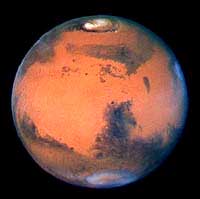
Mars is said to be the commander-in-chief of the assembly of the nine planets. It is also personified as the god of war.
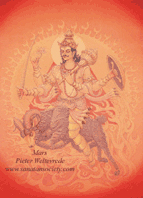
Mars is the Ksatriya of the Gods, meaning the warrior. Mars rules aggression, weapons, enforcement of law, emergencies, urgencies, weapons, energy, suddenness, rashness, anger, the colour Red, and related items and matters.
There are points in all of us when we apply our energy and quickness, usually to prevent a disaster, or to save a situation. For example, we move quickly to catch a falling glass object. Mars likes to protect- we race to save a child from running into the street. If somebody is hurt, we hurry to the scene. Mars people are often involved in causing bleeding with their weapons or stopping bleeding with their medical equipment. The gun of the soldier kills some and saves others. It's good to be on the right side of a person under the influence of Mars. A weak Mars makes one easily tired, jittery, easily angered, and reactive. Mars aspects 3 signs, the 4th, 7th and 8th signs from its own position.
Mars represents the energy, stamina and brothers of the individual. If well placed, it brings strength and focussed energy, if poorly placed accidents and injuries. Mars is best placed in Makara (Capricorn) where it is called exalted. Opposite from there, in Katrka (Cancer) it is least auspicious and called debilitated. Mars is lord of the sign Mesha (Aries) and Vrischika (Scorpio) and also of the houses where these signs are located.
Mars signifies: Energy, action, passions, male influence, courage, strength, motivations, anger, violence, determination, aggression, bluntness and boldness, injury, accidents, war, chemists, fire, anger, surgery, initiative, motivation, courage, technical or mechanical ability, sports - athletic, military figures, police, fires, physical strength, operations, muscles, blood, sexual vitality, weapons, machines, conflict, can inflict death, fire, selfish, criminal, goal oriented action, self-righteousness, land, property and real-estate, brothers, enemies, science, instruments, guns, knives. Its element is copper. It's colour is red and direction south.
Medical Astrology: Blood, head, injuries, accidents, bleeding, headaches, high fevers, inflammation, surgery, burns
Gems: Red Coral
Day: Tuesday
Rules: Aries and Scorpio Exaltation: Capricorn Debilitation: Cancer
Directional Strength: Tenth House
Remedies For MARS
1. Chant “Om Ang Angarkyanamah” mantra.
2. Daily worship Mars yantra established on copper sheet.
3. Read hanuman chalisa or Sundarkand.
4. Donate wheat and jaggery filled in copper utensil.
5. Consume water which is filled in a copper utensil.
6. Prepare food from wheat flour and jaggery on Tuesday and offer to Lord Hanuman.
7. Donate clothes of red color. Males should offer scarf or angocha in temples and ladies should offer saree etc of red color.
8. Tiered thread in the right hand.
9· Donate jaggery, red lentil, wheat, moong, ghee, red canner flowers, a red cow, copper vessel, oysters, and land as per capability.
10. The bark of bilva tree, red sanders, red flower, malkangni and maulsiri: powder all these things in equal quantity and put in bath water, by bathing with this water reduces the negative effects of Mars.
11. Offer sindoor Chola on Tuesday to Lord hanuman and offer jaggery.
12. Keep fast on Tuesday and receive things made by jaggery in food.
13. On Tuesday, make a Mangal Yantra or on a copper sheet in Siddha Yoga and wear it.
14. Read Rama Raksha's start.
15. Do Sunderland on Tuesday and Saturday.
Keywords: Speech and communication, skills, intellect, dexterity, equanimity, neutrality, curiosity, playfulness
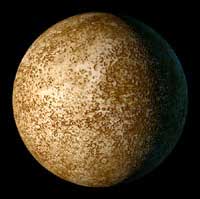
According to the Linga Purana, Mercury is the son of the Moon by his wife Rohini. Yet in the Vishnu Purana, Brahma Purana, Devi Bhagvata Bhagwat Purana, Harivansha Purana, Padma Purana and Vayu Purana a story is told of the seduction of Brahaspati's (Jupiter's) wife Tara by the Moon - and Buddha is born from her. He is called Saumya, that is, "Son of Soma [Moon]. " From Buddha springs the lunar race. The Moon, being his father, is friendly toward him, but Mercury knows that he is son of the wife of Jupiter and so he is in conflict with the Moon, who seduced his mother.
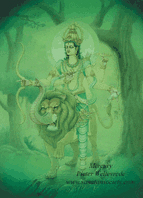
Mercury is youthful and causes youthfulness or immaturity in the chart in the house it resides. Mercury is the negotiator, so it rules in us the ability to be diplomats, negotiators, deal-makers, or good liars. Mercury rules all types of communications, spoken and written. A good Mercury in a chart makes for careers where speaking, studying, thinking, writing and other scholarly thinking related matters are necessary. A bad Mercury can work towards making a person dumb or odd in mental workings.
Mercury, being youthful, is neither mature nor convinced about anything for certain. He is truly a gullible boy, so, he is easily influenced by other planets. Any planet with Mercury will influence him. So Mercury is called "mutable" or "changeable". This reflects in the chart very much. Mercury always stands for the thinking capacity in a person, which in Sanskrit would be called your "Buddhi" or "intelligence". Mercury's Sanskrit name is therefore "Budha", which also means "the intelligence".
Mercury represents the speech, intellect and friends of the individual. It is a very, adaptable and curious planet. If afflicted, it gives speech problems and a poor discriminative ability. If well placed it makes a person witty, easy going and skillful. Mercury is best placed in Kanya (Virgo) where it is called exalted. Opposite from there, in Meena (Pisces) it is least auspicious and called debilitated. Mercury is lord of the sign Kanya (Virgo) and Mithuna (Gemini) and also of the houses where these signs are placed. Its element is bronze and the colour is green and direction north.
Mercury signifies: Mercury is talkative and tactful, but not harmful. It is a good trader, mathematician, editor and publisher. It has excellent argumentative and analytical power and mind. Intelligence, wisdom, speech, education, matters relating to communication such as speech and writing, humour, trade, commerce, sales, education, ideas, thoughts, school, analytical and rational mind, cognitive intelligence, sense of humour, youth, trickster, truth, telephones, television, computers, travel especially short distances, childhood, aunts and uncles, neighbours, adaptability, twins, astrology, nervous system. It represents memory, throat, arms, maternal uncles.
Medical Astrology: Lungs, hands, arms, nervous system
Gemstone: Emerald, Green Tourmaline
Day: Wednesday
Rules: Gemini and Virgo Exaltation: Virgo Debilitation: Pisces
Directional Strength: First House
Remedies For MERCURY
1. Chant “Om Boo Budhaya Namah” mantra as much as possible.
2. Worship Lord Ganesha and Lord Vishnu.
3. Read Vishnu Sahastranam.
4. Keep fast on Wednesday.
5. Eat moong dal (with peels) and green leafy vegetables in your meal.
6. Wear clothes in green color.
7. Give green grass to cows.
8. Take bath by mixing HardatBaheda, cow milk, Akshat, Gorochan, Suvarna, Amla, and Honey in water.
9. Donate whole moong, sugar, green cloth, gold, fruit, camphor, and ghee according to the capability.
10. On Wednesday, wear Panna Ratna in a gold ring in the little finger in Siddhi Yoga.
11. On any Wednesday, wear Budh yantra written on Bhojpatra by Ashtagandha with a pomegranate pen in Siddhi Yoga.
12. In Siddhi Yoga on Wednesday, purify the root of Vidhara tree with Gangajal, wrap it in green cloth and tie it in the right hand.
13. Offer sweets, food items, toys, educational material and clothes to young children or students.
14. Donate five or seven green items of Lord Ganesha.
15. Every Wednesday donate green Dhub and moong Ladoo to Ganesh temple.
Keywords: Knowledge, Expansion, (children, education, spirituality) teachers and teaching, Optimism
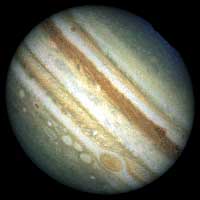
Jupiter in Sanskrit is known as Brahaspati or Guru. In the Taittiriya Upanishad Jupiter is said to be the intellect and speech of the Virat Purusha, the Cosmic Body. In the Brihat Parasara Hora (1.26.31) he is said to be the dwarf incarnation of Vishnu. In the Vishnu Purana he is said to be Brahma. Sometimes he is identified with Ganapati (Ganesh), and sometimes with Angiras (the priest of the gods and lord of sacrifices).
There is also a story that the wife of Angiras gave birth to Brahaspati (Jupiter), who is the presiding deity of mental powers and the teacher of gods. He is the teacher of the science of light, that is, vedic astrology and astronomy. He is the ruler of the Sun and the Moon and controls the movement of the planets.
In the Rig Veda Brahaspati is said to be born in the sky with seven faces and seven rays. Brahaspati defeats his enemies and breaks their forts. No ritual sacrifice can be complete without invoking this teacher of gods. He is the seer who perceived and wrote one of the hymns of the Rig Veda (10.72).
In the Skanda Purana it is said that Brahaspati worshiped Shiva for a thousand years and as a reward Shiva made him the planet Jupiter.
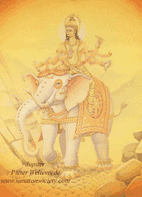
Jupiter is the "Guru of the Gods". Jupiter is called "Guru" in Sanskrit. Guru means "teacher" because he is "heavy with knowledge". Jupiter is also called Brihaspati (bree-haws-putt-tee). Brihaspati is the name of the Guru of all the demigods in the higher planets. He is the advisor, or teacher, of the demigods.
A good Jupiter in a chart which leans towards Jupiter in a positive way will grant good relations with Priests, Law, Higher Education, the Legal system, the Financiers of the world, and so on. Jupiter encourages righteousness when he is strong.
Jupiter is a large planet, and so rules largeness in things. Jupiter tends to expand things. Wherever he sits and wherever he aspects in a chart will tend to grow based on Jupiter’s influence. For example, if Jupiter affects the Lagna, which rules the body, then the body will tend to be large, or fatty. When a good Jupiter affects house ruling money then the money will tend to grow. Jupiter in the second house or third, which rules speaking, will tend to make the person speak often, and with a tone of divine advice, one of Jupiter’s other natural tendencies.
Gurus and advisers are always well wishers, so Jupiter is very giving or kind, and is known as a great giver or granter of fortune. Jupiter is considered the most benefic planet, because of his nature of always wanting to give and grant benedictions. Because children are an expansion of life in many ways, as well as a gift from God, Jupiter rules children. Because Jupiter represents God through his many advices he has a tendency to be related to the ninth house, which rules God in our lives.
Jupiter represents knowledge, wisdom and the offspring of the individual. It is a planet of expansion, growth and good fortune. Jupiter is best placed in Katrka (Cancer) where is called exalted. Opposite from there, in Makara (Capricorn) it is least auspicious and called debilitated. Jupiter is lord of the signs Dhanus (Sagittarius) and Meena (Pisces) and also of the house where these sign are located. Jupiter aspects 3 signs, the 5th, 7th and 9th signs from its own position.
Jupiter signifies: Spiritual teacher, guide, truth, religion, philosophy, spirituality, grace, law, the great benefic, fortune, wealth, expansion, higher education like colleges, optimism, generous, joy, luck, self-indulgent, excessive, faith, children, money, husband in a females chart, long distance travel
Medical Astrology: Liver, hips, overweight, edema, high cholesterol, growths such as tumors
Gem: Yellow Sapphire, Yellow Topaz, Citrine
Day: Thursday
Rules: Sagittarius and Pisces Exaltation: Cancer Debilitation: Capricorn
Directional Strength: First House
Remedies For GURU
1. Chant “Om Bra Brahasaptye Namah" mantra more and more.
2. Keep fast on Thursday and take food made with salt-free gram flour.
3. Feed cow with soaked gram lentils and fresh bread on Thursday.
4. Wear yellow clothes.
5· Wear a topaz or golden gem on the index finger.
6. Read religious books.
7. Serve and donate to gurus and Brahmins.
8· On Siddhi Yoga on Thursday, take the root of Bhrangraj or banana, wrap it in yellow cloth and wear it.
9. Put saffron sandalwood on the forehead or donate saffron to the temple.
10. Visit pilgrimage places and temples.
11. Do havan with peepal wood.
12. In Siddhi Yoga on Thursday, write a Yantra with a pomegranate pen using Vishnu gandhastak and fill it in a gold or brass amulet and wear it. By doing this, the inauspiciousness of Jupiter is reduced.
13· Feed jaggery and gram lentils to the cow every day or Thursday.
14· Donate yellow clothes to Brahmin or temple.
15. Serve the yellow sweets in the temple and Distribute to the children.
Keywords: Pleasure, love, sex, happiness, sensual desire, service, devotion, courtesy, manners, vitality, respect, improvement
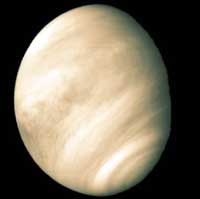
Venus, known as Shukra in Hindu mythology, is the son of the great seer Bhrigu. Bhrigu was an astrologer and taught his son all of the spiritual sciences and scriptures. Because of Shukra's enmity toward Brahaspati (Jupiter), he (Shukra) agreed to be the teacher of the asuras (antigods). When Shukra became the preceptor of the antigods, in order to protect them against the gods and subgods he worshiped Shiva and learned from him the method by which he could bring them back to life even after they were killed in battle. Shukra in Sanskrit means "semen".
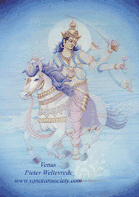
Venus is called Shukra in Sanskrit. Shukra literally means "semen", but more generally means "refined things". Venus rules over all types of refined things that are desirable such as art, music, flowers, love, beauty etc. A well placed Venus in a chart that is well disposed towards Venus will grant to the person a life full of "the good things" such as those things mentioned above.
The Vedic way of understanding of life, and the process of elevation, is such that addiction to material gratifications are known to be often "an-arthas" or "unnecessary". Too much stress is laid upon material gratifications in ungodly societies. So, Venus is loved and followed when the person or society is of the materialistic type. For Westerners, a good Venus is considered a good thing, because it helps in bringing in material wealth, sense gratifications, and all types of material fortunes. Famous, rich and beautiful people often have strong Venus, as these blessings are highly desirable to the materialistic masses, who love to worship such "achievements" in life. People in general are much more interested in the "Lives of the Rich and Famous" than they are in the "Lives of the Intelligent and Devoted".
While Jupiter tends to give advice leading to surrender to higher principles, Venus gives advice which works for us in the here and now. Jupiter is more about dharma, or religion for higher principles, whereas Venus is more about a dharma or self serving ways. The entire Vedic principle is to surrender to the greater laws of God, whereas Venus teaches us to maximize things as they are now, for ourselves. But it is not that one is bad and one is good - it's that priority has been established correctly. It is not wrong to have material quality in our lives, or pleasures and enjoyments, but they should not direct us and dictate our actions when higher principles of goodness are at stake.
Venus represents the enjoyment, taste, sexuality and relationships of the individual. It can give a person a great sense of aesthetics and very pleasant personality, or sensual and tasteless, dependant on how well it is placed in the chart. Venus is best placed in Meena (Pisces) where is called exalted. Opposite from there, in Kanya (Virgo) it is least auspicious and called debilitated. Venus is lord of the sign Vrishabha (Taurus) and also of Tula(Libra) and of the houses where these signs are located.
Venus signifies: The feminine spirit, beauty, grace, charm, refinement, luxuries, wealth, sensuality, vanity, charisma, glamour, good taste, sexual attraction, elegance, comforts, arts, music, theatre, love, wife in a males chart, pleasure of the senses, sugar, affections, conveyances, flowers.
Medical Astrology: Reproductive system, bladder, kidneys, and pancreas - diabetes
Gemstone: Diamond, White Sapphire, Clear quartz crystal
Day: Friday
Rules: Taurus and Libra Exaltation: Pisces Debilitation: Virgo
Directional Strength: Fourth House
Remedies For VENUS
1. “Om Shum Shukraaya Namah” Chant this mantra more and more.
2. Worship Kuldevi.
3· Mix ghee and sugar in cooked rice and feed the Taurus (bull).
4. Worship girls, provide food and give them gifts.
5. Read Srisukta or Lakshmi strot.
6· Wear diamond on Friday.
7· Do not eat sour things on Friday.
8· Women should give items of makeup to married women.
9· Wear 'Manjistha' tree root in Siddhi Yoga on Friday.
10· Havan with timber of Guler tree.
11· Printed clothes, beautiful brocade dupatta, white horse, a white cow, diamond, mirror, gold, rice, fragrant substances, ghee and silver, donate these items as per the ability.
12. Worship Lord Shankar's family.
13· Offer food to a Brahmin who is having eyes or curved vision and donate rice and silver coin and appropriate colored clothes (not black, yellow, and red).
14· On Friday, write the Venus Yantra with a pomegranate pen on the Bhojpatra using Devi Gandhasthak and wear it by keeping in a silver shell.
15· Read Durga Chalisa or thirty-two names of Goddess Durga.
16· Feed the pigeons with jawar on Friday.
Keywords: Ambition, fear, responsibility, the perseverance and capacity for hard work, stress, isolation, Old people
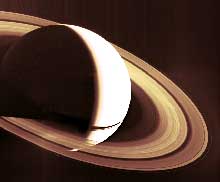
In Sanskrit he is called Shani or Shanaishchara (the slow mover), because he takes about two and a half years or so to pass through each constellation of the sidereal zodiac.
In the Linga Purana it is said that Shani was born from the solar deity Rudra. The Markandeya Purana states that Shani is the son of the Sun god by his wife Chaya (shadow).
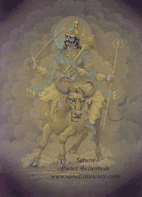
Saturn is known for his ring. Saturn rules restrictions - or things that surround us on all sides. All types of blocks, restrictions and obstacles are the ruling lot of Saturn. The wedding ring is related to Saturn, because it represents a restriction that prevents certain types of actions - namely, courting other spouses and therefore the ring is a symbol of a block or restriction.
Saturn is the outermost planet in the Vedic scheme of things, and so has "the last laugh". Saturn is final, being the last one. Saturn rules all types of final things, or things which are insurmountable. Saturn is "the bottom line" in many ways. Therefore, Saturn rules Death as well as Unconquerable Time. All things decay in time, and Saturn rules this decay, or the effects of old age. Saturn is old, and low, the worker, the downtrodden, and the dirty.
Saturn rules the colours Navy blue and black, which are akin to seriousness, coldness, and finality. Things turn dark when they are dead, when the colour of life has gone out. The sky is either blue or black because the distance we are looking at when we look at the sky is always insurmountable, being such a far distance. When we look across the land the trees in the distance are more "greyed out" than the closer trees, because that distance, being insurmountable, takes on the dulling effects of Saturn. If something is hazy or unclear, it is because it is "out of reach" and that is Saturn again.
When Saturn affects a house or planet in a chart, then it "shuts it down" to some degree, by means of it's strong oppressing power. Saturn has the ability to oppress anything. When it aspects the Moon, or Mind, then the person feels the effects of Saturn in their mind, which basically leads to depression.
Saturn is large and slow, and so it rules these things. Large slow things cause a lot of pressure, and so does Saturn. When Saturn affects something, it slows it down, puts it under pressure, and ultimately crushes it under its tremendous weight and restrictive power. On the good side, these things give it rule over focus. Focus is a funny thing - it means application of pressure for a certain goal. Saturn can make things it affects highly focused or controlled, which at times is a very good quality.
Because of all these things, Saturn is considered a "first class malefic", or in other words, a planet capable of doing great harm. But that is spoken from the angle of vision of the materially oriented. Materially speaking Saturn is usually malefic, except when his reduction and crushing capacity is used, in the chart, against the enemies of our material progress. For example, if Saturn is situated in such a way as to crush the twelfth house, or the house of losses, then our losses are crushed, which means we don't lose as much.
But Saturn has another good side. Consider the diamond - it is created from black coal under great pressure for a long time. Saturn rules coal, pressure, and long periods of time. So, Saturn creates the diamond, which is very beautiful and extremely hard. When a person is under Saturn, they eventually become beautiful and hard, or shining and strong. The trials and struggles that Saturn puts us through teach us hard lessons.
Therefore Saturn rules the side of the religious peoples which is strong in principal, unbending, renounced from material motivations, and so forth. Saturn has a lot to do with the dark blue colour worn by most Police officers, and the black worn by many Priests. Men often wear dark suits to do business, because it promotes a no-nonsense, dead-serious demeanour in their business dealings.
Saturn rules the low workers or Shoodras, as we say in Sanskrit. This is because he rules all things low and difficult. Things which are cold, dark, hard and created under pressure are ruled by Saturn, so he rules many types of metal like iron and steal, as well as the tools of hard work. Because he is an old man, he rules old things.
Saturn is the slowest moving graha, and represents the more time related aspects in life: endurance, sense responsibility, hard work, longevity and reclusion. It is typically described as the bringer of grief and misery in life, but if it is auspiciously placed in a chart it will be one's best insurance against poverty. Saturn is best placed in Tula (Libra) where is called exalted. Opposite from there, in Mesha (Aries) it is least auspicious and called debilitated. Saturn is lord of the sign Makara (Capricorn) and Kumbha (Aquarius) also of the houses where these signs are located.
Saturn signifies: Discipline, order, structure, dependable, stability, separation, solitude, limitation, obstruction, poverty, death, disease, oppression, pessimistic, worry, fear, bad luck, old age, delays, retards things, concentration, paralysis, depression, stunted, deprivation, bondage, fixed assets, land, property, endurance and lasting, doubt, phobias, darkness, sorrow, longevity, detachment, decay
Medical Astrology: geriatrics, death, bones and teeth, osteoporosis, arthritis, degenerative diseases, dehydration, premature aging, cancer
Gem: Blue Sapphire, Amethyst
Day: Saturday
Rules: Capricorn and Aquarius Exaltation: Libra Debilitation: Aries
Directional Strength: Seventh House
Remedies For SATURN
1· “Om Shan shaneshcharaya Namah" Chant this mantra more and more.
2· In the house, you should chant the Mahamrityunjaya Mantra with a rosary of Rudraksha, by setting the Parad and Sphatik Shivalinga (not others) on a beachhead, setting it in a pure vessel, worshiping it in a lawful manner.
3· Recite Sunderkand and worship Lord Hanuman, recite Sankatmochan.
4· Chant Hanuman Chalisa, Shani Chalisa, and mantras of Lord Shani.
5· On Shani Jayanti, go to Shani temple, anoint and worship Shani Dev.
6. Another solution - Burn sweet oil lamps under the peepal tree in evening on Saturday.
7· Put black horseshoe on the main door of the house on Saturday.
8· Donate black sesame, woolen clothes, blankets, leather shoes, sesame oil, urad, iron, black cow, buffalo, Kasturi, gold, etc.
9· Visit the temple of Shanidev, decorate him with black clothes and make offerings of black gulab jamuns as per the procedure.
10· Make a ring of a horseshoe or a nail of the boat and wear it in the middle finger.
11· In your home temple, put a quarter past three blue Sapphire in a casket on Monday and pray “these are of Shanidev’s name” by keeping 12 rupees in your hand. Then purchase seven grains (satnaj) from 10 rupees and Spread the rest 2 rupees on the hole of ants or cold bushes and pray for the relief from suffering to Lord Shani.
12· After seeing the shadow in the bitter oil, donate it after moving seven times over yourself; donate even the worn clothes, do not donate money or jewelry etc.
13· See the feet of the lord Saturn, Be away from seeing face.
14· Fast for Shani: From the Shukla side of the Shravan month, Start fasting for Shani, 33 fasts should be done, and then do udyapan and donation.
15· Write Shani yantra on bhojpatra with a pomegranate pen by Ashtagandha on Saturday and wear it.
16. Give something as a donation to a poor lame man.
Rahu (the Northern Lunar node)
Keywords: Obsession, attachment, distorted perception, blowing things out of proportion, psychic ability
In the most ancient scriptures on vedic astrology we do not find the names of Rahu and its counterpart, Ketu. Instead, only seven planets are mentioned.
The name of Rahu first appears in the Mahabharata, when we read the story of the churning of the Ocean of Milk in the search for ambrosia - the elixir of immortality known as amrita in Sanskrit. Rahu was the son of Danava Vipracitti by his wife Simhika, and a brother of Maya Danava, the great magician and architect.
Rahu and Ketu are two parts of the same danava and are 180° apart from each other. Whenever either Sun or Moon are conjunct with Rahu or Ketu, a solar or lunar eclipse takes place.
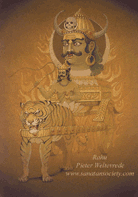
Rahu is the point in the zodiac where the paths of the Sun and the Moon cross. If the Sun and Moon in their movement meet in this point, then an eclipse takes place. Eclipses "seize" the light of the Sun or the Moon, and it is this seizing quality that is characteristic for Rahu. Rahu is not an actual planet-ball, as the other planets are, but a point in space that is of great influence. The nodes Rahu and Ketu are always opposite each other in the Zodiac. They are calculated from the orbits of the Sun and Moon in relation to the Earth. They are gravitational line up points. They cause the Moon to actually wobble in it's orbit.
It is a scientific fact, that when the Moon gets close to the nodes in it's real orbit, that it wobbles due to the gravitational pull of the point. So, when in a chart we see that the person was born at a time when the Moon was close to one of the nodes (Rahu or Ketu) that the mind is disturbed, since the Moon rules the mind. This is a fact which you will see played out in the lives of those who have this. Since the nodes occupy two signs, roughly one sixth of the population has this. However, it is strongest when the Moon is really close to the Node it conjoins - or in other words, when the two are close by degrees within the sign - say within 5 degrees of each other. Then the effects become pronounced.
Rahu's nature is that of anger, upsetness, anxiety, suddenness and other things which we would feel if we got our heads cut off right when we were getting something we wanted. Think of it: Just when you are about to get what you always wanted, right then something comes to totally ruin your plans. But, the secret is this: Anyone who is killed by the weapon of Vishnu is also highly benefited spiritually, so this plays out in our lives as well. So, the effects of Rahu can be said like this: Painful and troublesome, but ultimately for a higher cause.
Rahu signifies: Fame, extremes, foreigners and foreign lands, fulfilment of worldly desires, status, prestige, power, worldly success, outer success with inner turmoil, obsessive, addictions, psychic, disturbances, collective trends, disturbances, poisons that destroy and heal, medicine, drugs and alcohol
Medical Astrology: Plagues, epidemics, possessions, manic depression, insanity, addictions,
hormonal imbalances, suicide, insomnia, hysteria, neurosis, nervous disorders, cancer
Gem: Hessonite Garnet (Gomehda)
Exaltation: Taurus Debilitation: Scorpio
Directional Strength: Tenth House
Remedies For RAHU
1. “Om Ran Rahave Namah Chant this mantra as much as possible, perform hawan through durva.
2. Keep fast on Nag-Panchami and worship Nagdev.
3. Read the Nav Naga strotra daily.
4. Donate seven grains of sesame seeds and black blankets.
5. Make a Nag idol of gold, establish it in the house, worship it with saffron sandalwood daily and chant nav Naga Strotra and Nag Mantra "Om Nagarajaya Vidamahe Kadruvanshay Dheemahi Tanno Sarpah Prachodayat".
NAV NAG STROTRA:
Om anant vasuki ses padamnaabh cha kamblam,
Shankhpal Maharashtra takshak kaliye tatha,
Etaani nav namaani nagaana cha mahatmanaam,
Praatah kale pathennitya saanye kale visheshtah,
Tasya vishabhya naasti sarvatra vijayi bhavet.
6. Donate urad, onyx gemstones, black horse, sward, blue cloth, woolen blankets, sesame seeds, oil, mica, saptadhanya, and gold.
7. Take bath by mixing Nagaramontha, Bilvapatra, red sandalwood, and Saffron-Kasturi in bath water and wear onyx gemstones on Saturday after getting advice from a good astrologer.
8. Worship the totem and get Vastu improvement in your abode.
9. Write Rahu Yantra on the Bhojpatra with a pomegranate pen by Ashtagandha on Saturday and wear it.
10. Give grains to sparrows. Crush barley flour, millet flour, black sesame, sugar, ghee, and coconut powder.
11. Feed bread to the black dog, if you have more trouble then give imarti to the dog (not more than two).
12. Read thirty-two names of Goddess Durga.
Ketu (The southern lunar node)
Keywords: Dissatisfaction, detachment, solitude, intense scrutiny, liberation, explosive nature
Ketu is what remains of the body of Rahu.
Ketu is a headless half-planet, shadowy as Rahu and malefic, though not as malefic as Rahu. It is therefore considered a moksha-karak (cause of liberation from the cycle of birth and death). It bestows spiritual tendencies, ascetism and nonattachment to worldly desires and ambitions.
Ketu is also a half-planet that bestows wisdom, powers of discrimination, and gyana - spiritual knowledge, the knowledge of the self. It gives psychic abilities to it's natives and makes them masters of the healing arts, natural healing, healing herbs, spices, foods, tantric healing, healing of persons possessed by evil spirits, ghosts and astral forces. Ketu natives also have the ability to go unnoticed or merge into the crowd of common folk.
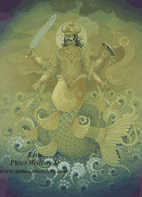
Ketu is not really a planet, but rather a mathematically calculated point in the heavens. Because of its lack of a "body" it represents uncertain, unexpected and unpredictable phenomena. It is intelligent and relates to mathematics and other abstract knowledge.
Wherever Ketu sits in a chart there we will find the sucking black hole effect. It feels forever like a hole into which we tend to want to put more and more of that thing to satisfy it. We cannot get enough where Ketu sits- we feel the lack of that house in our lives very much. Therefore many say that Ketu rules separations, cuts, loses and deprivations.
For the spiritually minded Ketu is very good, and for the materialistic, very bad. It is good for the spiritually minded because it rules liberation from bondage. When Rahu's body was separated from his head, the body no longer was under the influence of Rahu's mind, and so was free. Ketu represents the ultimate freedom from ourselves, our spiritual liberation. Ketu is very final in this sense.
In Vedic thought, liberation, called "Mukti" or "Moksha" is considered the highest goal of life. After all our material role playing is through, we are to seek liberation from material bondage and misidentification, and seek out union with God (Yoga means union). So, liberation is the highest goal and Ketu is the "Moksha Karaka" or significator of Moksha in our charts.
When reading astrological books, one must remember that many of them were written, oddly enough, from the materialistic viewpoint. Indeed, today also, many people who are into astrology are into it for reasons of bettering their material positions, or finding out just how good their life (here on Earth) is going to be. Therefore, the books often say that Jupiter is the highest benefic. However, spiritually minded astrologers know that, in terms of real spiritual development, Saturn is above Jupiter and Ketu is above Saturn. Jupiter rules Wisdom, but Saturn rules Truth, yet Ketu rules Moksha, the highest achievement of all. So, Ketu is the most spiritual planet, with Saturn being next in line, and Jupiter takes third place.
Ketu signifies: Loss, liberation, perception, wisdom, lack of confidence, negation, self doubt, fantasies, confusion, indecision, illusions, drug addiction and alcoholism, psychic influences, fire, injury, death, spiritual insight
Medical Astrology: Psychic disorders, radiation diseases, cancer, surgery and malpractice
Gem: Cat’s Eye
Exaltation: Scorpio Debilitation: Taurus
Directional Strength: Twelfth House
Remedies For KETU
1. “Om Kem Ketave Namah" Chant this mantra more and more. Perform Havan with Kusha.
2. Worship Lord Hanuman and offer flag in the temple.
3. Donate the items made of glass and saptdhanya.
4. Write Ketu Yantra on Bhojpatra and wear it.
5. Wear the cat’s eye gemstone.
6. Add Kusha in water and offer it to the root of Peepal tree.
7. Donate seven grains (saptdhanya) or feed birds.
8. Feed the goat and distribute seven types of fruit is poor.
9. Offer green moong and dhoop in Lord Ganesh temple.
10. Chant the Ganesh Mantra ("Om Gan Ganpataye Namah") or read the 108 names of Ashtotri.
Er. Rameshwar Prasad invites you to the Wonderful World of Indian Astrology.
Engineer Rameshwar Prasad(B.Tech., M.Tech., P.G.D.C.A., P.G.D.M.) Vaastu International
|