VASTU ARTICLES
Vastu Guide
Vastu is an ancient Indian science of architecture and buildings which helps in making a congenial setting for a place to live in and work in a most scientific way, taking advantage of the benefits bestowed by Nature, its elements and energy for enhanced wealth, health, prosperity and happiness.
Select Topic
|
|||||||||||||||||||||||||||
|
FOR VAASTU INTERNATIONAL COURSES - CLICK HERE
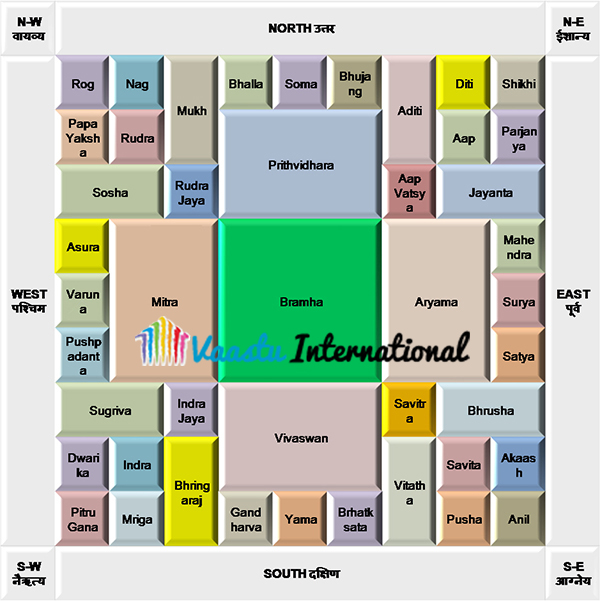
Vastu is a complete understanding of direction, geography, topography, environment and physics. It is a study that dictates the form size and orientation of a building, in relation to the plot, soil, surroundings and the personality of the owner / dweller. There is no room for rituals and superstitions. FOR VASTU NUMEROLOGY COURSES - CLICK HERE FREE ONLINE VASTU SOFTWARE - CLICK HERE FREE ONLINE MOBILE NUMBER NUMEROLOGY CALCULATOR IN HINDI - CLICK HERE FREE ONLINE MOBILE NUMBER NUMEROLOGY CALCULATOR - CLICK HERE FREE ONLINE LO SHU GRID CALCULATOR - CLICK HERE FREE ONLINE LO SHU GRID (HINDI) CALCULATOR - CLICK HERE FREE ONLINE VASTU NUMEROLOGY SOFTWARE - CLICK HERE FREE ONLINE NUMEROLOGY CALCULATOR - CLICK HERE FREE ONLINE HINDI NUMEROLOGY CALCULATOR - CLICK HERE FREE ONLINE NAME NUMEROLOGY CALCULATOR - CLICK HERE FREE ONLINE DESTINY NUMBER CALCULATOR - CLICK HERE FREE ONLINE KUA NUMBER CALCULATOR - CLICK HERE FREE ONLINE CHINESE ASTROLOGY SOFTWARE - CLICK HERE FREE ONLINE TATOT CARD SOFTWARE - CLICK HERE FREE ONLINE INDIAN ASTROLOGY SOFTWARE - CLICK HERE FREE ONLINE DAILY PANCHANG CALCULATOR - CLICK HERE FREE ONLINE LAL KITAB PRASHNAVALI - CLICK HERE FREE ONLINE NAKSHATRA AND RASHI CALCULATOR - CLICK HERE Vaastu orientates, places and dictates the proportions of every detail as in building lines, skylines, elongations, levels, slopes, water tanks (underground and overhead), kitchen, bedrooms, toilets, staircase, heights of ceilings and roofs, entrances and loci of doors and windows, compound walls and so on. TO KNOW MORE ABOUT 45 VASTU DEVTAS [ENERGY FIELDS] - CLICK ON BUTTONS
Architectural science and equipment have undergone a sea change over the years. However, the principles of Vastu, although modified to suit the modern times, still remain applicable.
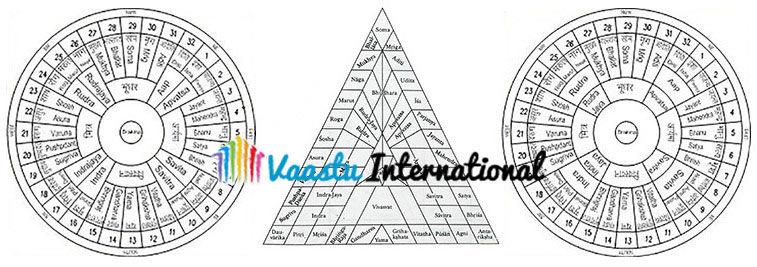
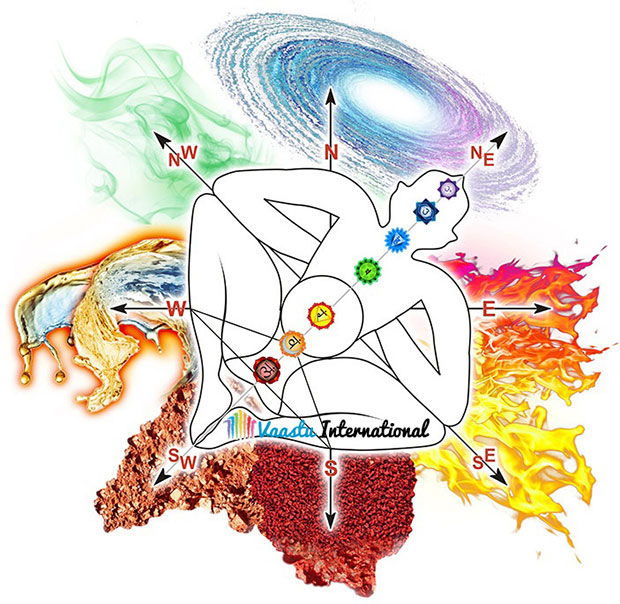
Always Remember that Circular and Triangular Vastu Purush Mandalas, Given in Our Ancient Texts, are for Circular and Triangular Structures / planning only. Join our Advance Vastu Practitioner Course. Vastu Shastra is a science which teaches us to be compatible and create a perfect harmony between the five essential elements of nature; Sky, Earth, Water, Fire, and Air with Earth's magnetic field.
It is imperative to harness the amazing power of nature and live in tune with it since we ourselves are evolved by nature, we live in nature and would perish and return back to nature. Records and scriptures are full of testimonials from kings, commoners, artists, saints and traders on how Vastu helped them reap great benefits. Be it a home or office, factory or a commercial block, Vastu has been known to reward the follower with benefits and protection from ill effects of life and unpredictable effects of nature. We live in, and are surrounded by, various types of energy fields which operate freely in open space. When we place a structure in our establishment, the equilibrium is affected. Vastu helps in so designing the structure that it ensures a harmonious flow of energy in the building and restoration of that equilibrium. Where we live can influence our happiness, wealth, health, and prosperity. The Vastu Shastra is the Vedic science of building. When one studies the Vastu Shastra, he learns to create buildings that favorably influence those things that bring us happiness. The Vastu Shastra considers the astrological placement of the Sun, Earth, and other planets during the actual construction. It also considers where the building site is located, the site’s shape, the proposed building’s shape, the direction the building will face, the location of gates, entry doors, room doors, windows, and the building’s general design. North and east are considered important directions. East is important because it is the direction from which the sun rises. Assessing the Land The land should be cultivatable and should smell good. It is best not to build on nonarable land. Land that contains many rocks, anthills, many worms, bones, broken pottery, sludge, and thorny trees should not be purchased. If the center of the land is humped like the shell of a turtle, it should not be purchased. The color of the soil should also be considered. White soil is good for brahmans (priests, teachers, scientists, or intellectuals), red for ksatriyas (rulers, soldiers, or administrators), yellow for vaisyas (businessmen, farmers or bankers), and black for sudras (laborers, artisans, craftsmen, or servants). If the soil is black up to 1m (3 ft) down and white or red below that, the land can be purchased. According to Vastu Shastra, black and clayey soil is not good for building. If the soil is crumbly rock, money can easily be gotten. Yellow soil is good for businessmen. Another test of land quality is to dig a knee-deep hole (2/3m or 2'x2'x2') and then refill it. If after filling the hole you have some soil left over, the land is good. If there is no soil left after filling the hole, the land is average. If the returned soil does not even fill the hole, this is not a good sign. Such land should not be purchased. This shows the soil’s natural moisture and aeration.Again dig the same sized hole. This time, fill it with water. If it takes more than an hour for the water to be absorbed, this is a good sign. If there are many cracks in the hole after the water has been absorbed, the construction may cost more than you expect. This is a percolation test done even in the U.S. to test for clay deposits. The cracks indicate clay soil, which is not best for water drainage and can cause foundation problems, etc. Also, wastes are not carried away properly, which can bring disease. Do not purchase land that has been used as a crematorium, cemetery, or a samadhi (tomb for a holy person). The land should not be purchased if in the recent past someone has committed suicide on it, or if there have been several deaths over the period of a couple of months. It is usually best not to purchase land next to a bridge. If the bridge is on the north or east sides, it definitely should not be purchased. If it is on the south or west sides, that is a safer purchase. It is also usually best not to purchase land that shares a well with another property. The land can be purchased, however, if the water supply is a common well on the north, east, or northeast side. After choosing and purchasing land, plants should be grown on the land. Also, if possible, keep a cow and her calf on the land for a while to make it more auspicious. The Land If the plot of land does not squarely face the four cardinal directions, and if the road does not run in one of the four cardinal directions, the house should be built facing the four directions The house should be square or rectangular, and the faces of the building should each be toward a cardinal direction, and not built facing the road. It is not good to purchase a piece of land squeezed between two larger pieces of land as such land will bring its owner poverty. The northeast side of the land should be the lowest side. If the northeast side is at a higher elevation than other sides of the property, you can dig soil from that one side and use it to build up the other parts. The land should either slope down toward the north or east, but not toward the west or south. Land sloping north brings riches, sloping east brings good fortune, sloping south brings ruin, and sloping west brings financial loss.
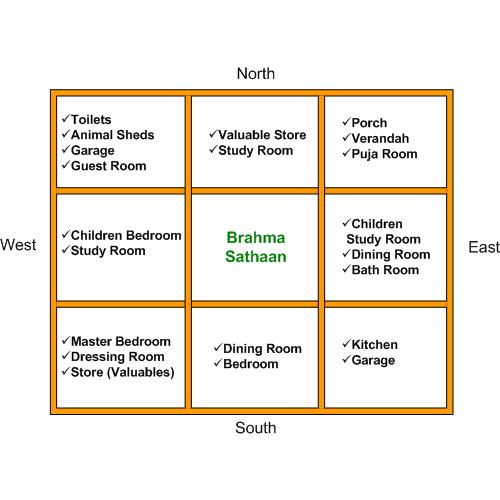
It is auspicious if tall buildings or hills do not obstruct the north, northeast, and east sides of the land. Do not purchase land with such obstructions to those sides because the sun’s rays will be blocked. Having those same obstructions blocking the west or south sides, however, bring health and wealth—light coming from the southwest is not beneficial. The sun’s rays traveling westward are considered harmful. Thus such obstructions block out harmful rays.For the same reason, a water source located on the southwest side of a building will cause the owner misery. Similarly, there should be a minimum number of doors and windows set into the southwest side of a building; the majority of windows should be set in the northeast side. It is auspicious if the plot has a river or a stream flowing through it on the northeast, or if there is a lake on the same side. It is not auspicious if there is an electrical power supply or large electric pole on the northeast side of the plot. A telephone pole is not negative in the northeast, however. Construction Building materials should be stored in the southwest corner of the property during construction. The storage area or structure can also be built in the southeast corner, at least 1m (3 ft) from the property boundary. The guard should stay in a house in the southeast corner. Thieves will be a danger if the guard stays in the northwest corner, and the guard should not stay in the southwest corner. Order of construction: the well, the storage house, and then the boundary wall. Roads in Relation to Land If a road runs alongside the property and ends at the northeast corner, that is also very good. If a road ends on any other parts of the property, however, that plot is usually not good. A road on the north side of the property is good, but a road on the south side is not so good. If there is only one road, it is best if it is located on the east side. It is not so good if it is located on the west side. If there are roads on only the east and north side, that is good. If there are roads on the west and north, it is average. Roads on the north, west, and east—that is, only on these three sides—is not so good. Roads on the north, south, and west is also not so good. It is inauspicious if there are three roads only on the east, south, and west.Land should also not be next to a T or Y intersection. Building Material Wood from thorny trees should not be used, as it will have a negative effect. Materials that have been stored for a long time should also not be used. Iron grills should only be used when needed. If the land is cut in the corner this is not good. If possible the land to fill in the missing corner should be purchased. If the land is cut short on the northeast side it is very bad and is not aspicious; do not purchase it. It is like a headless body. Round, oval, and triangular plots should be avoided. The house should not be built in the shape of a diamond, with the corner facing north. L-shaped plots are also inauspicious and should not be purchased. It is good if the plot is narrower at the entrance and wider at its rear, but the opposite is not good. Well or Water Source The well can also be in the north or east sides of the property. The well should not be in the northwest or southeast corners, as this is inauspicious. It is especially inauspicious if the well is dug in the southwest corner. It is also inauspicious to have a well in the middle of a house. Wells should be round. Ideally, the well water should be exposed to sunlight for five hours a day. It is not recommended to share wells between two properties. The well should be dug after puja (worship) has been performed on the land at an astrologically auspicious time. This will insure that the water will be pure. The well should be dug under an auspicious star, such as Rohini, Hasta, Uttara Bhadrapada, Uttara, etc. It should be dug on an auspicious day—a Monday, Wednesday, Thursday, or Friday. The well should be dug during a downward-facing constellation or star, such as, Krittika, Purva Phalguni, Mula, Bharani, Ashlesha, Purva Bhadrapada, or Purvashadha.Water departing from the kitchen and bathroom should flow to the northeast and leave the house from this side. The southwest part of the wall should be higher than the rest of the wall. The walls on the north and east sides should be 53cm (21 inches) shorter than on the west and south sides. If this is not possible, then the north and east sides should be a minimum of 8cm (3 inches) shorter. Do not set the gate on the south side. It is best that there are two gates to the compound, so evil things entering one gate will exit from the other. It is also good to keep a tulasi plant in the northeast corner.The electric generators should be situated on the southeast section of the plot, not the northeast, which is inauspicious. Loud machinery should not be placed near the house. If there is to be a swimming pool, waterfalls, or fountains, they should be set to the north, east, or northeast. Gardens, plants, or the lawns should also be set to the north, east, or northeast. Plants should be less than 1m (3 ft) in height. Swings should be to the north or east, and should swing from east to west. Outdoor seats should be placed in the south or west of the open area, and people should face north or east while sitting. It is considered inauspicious to block the entrance to a house, such as with a tree or telephone pole. If one of these things is more than twice the distance of the house’s height away, it will not have any effect.Trash or dirty water should not be kept near a house’s entrance (or the entrance to a place of business), and neither should it be kept near the property’s entrance. An unclean stream or pool of unclean water should not be located in front of the house.Annexes or outhouses should not be on the north or east sides of the house, and they definitely should not touch the eastern or northern boundary walls. A garage, building, or servants’ quarters built separately from the house should be located to the southeast or northwest of the main house but should not touch any of the boundary walls. Ideally such quarters should not touch the southeast corner, but should be slightly west (without touching the east wall). They should also not touch the northwest corner but should be slightly south (without touching the north wall). They should be established about 1m (3 ft) from the wall. Parking The parking lot should be in the northwest corner of the property. It should not be located to the southwest or northeast. Parking can also be located in the basement, on the north or east side. A parking garage should not be connected to the compound wall or the main building. The parking garage should be painted a light color, not a dark color. Roof Balconies and Verandahs The floor or roof over a balcony or terrace should be lower than the floor or roof of the main building. It is best if the verandah’s roof is slanted toward the northeast. Tin is a good roofing material for such structures. The verandah’s corners should not be rounded, and balconies should not have arches.Flowerpots on the verandah should be small. No creepers should be planted on a verandah. The seats on the verandah should be set on the south or west sides. Shoes can be removed and placed on the verandah. They should not be placed to the northeast. Do not align doors within the house. One door should not lead directly into another. It is best when a student studies that he face north, northeast, or east. Therefore a table in a study room should be placed in the south or west sides of the room. Books should be stored in the southwest side of the room. Do not keep money in a place facing south. Beds should face either west or south to insure that when a person rises in the morning, he is facing either north or east. While asleep, one should place his head to the south, east, or west, not north. If one’s place of worship is in the bedroom (in the northeast), one should sleep with his head facing east to avoid pointing his feet toward the altar.Mirrors should be placed on the north or east walls, not on the south or west walls. Do not keep broken mirrors in the house. Clocks should be placed on the west, north, or east walls. Clothes should be washed in the southeast corner of the house. Medicine should be kept in the northeast corner of the house, and a person should face northeast while taking it. It is best to nurse those who are ill in the southwest corner of the house, although the northwest corner is also good. Rainwater and wastewater should leave the house from the northeast side. It should flow west to east or south to north. There should be an even number of columns and beams in the house, not odd. Doors should generally be made from a single piece of wood and should open on the left side. Stairways should be on the south, southwest, or west sides of a building. Certain pictures should not be hung in a house such as nudes, animals fighting, captured elephants, hunting scenes, trees without fruits or flowers, snakes, owls, bats, vultures and pigeons. It is best that a house has two entrances. The exit door should be smaller than the entrance, and it should have only one shutter. If there are two external doors for the house, they should not be set in a straight line. When one enters the house, there should not be a wall in front of the entrance. There should be a door that opens to the next room. A shadow should not fall on the main door. The main door of the house should not be below ground. Neither should the main door be in the center of the house, nor in the extreme corners. If the door is set in the north wall, move it east of center; if it’s in the east wall, move it north of center. If it is set in the south wall, it should be moved east of center; if it is in the west wall, move it south of center. Some authorities say that if the house’s entrance is in the west wall. It should be centered.Some Vastu authorities say that to figure out where to place a main door, divide the house into nine parts. The door should be in the fourth section of the house from the left hand side. From the right side of the house, the entrance is in the sixth division from the right. The main door should not be situated across from the main door of another house. The entrance doors of two houses should not be exactly opposing one another. Neither should two houses share a common entrance. If the entrance of the house is to the south, there should not be a balcony or verandah in front of the door. It is good to set gates to both the property and the entrance to the house on the north or east sides. It is also all right to have the main door on the west wall. It is not advised to have the main entrance on the south side. It is considered auspicious if the entrance to the property and the main door of the house are on the same side. It is not considered good if the main door to the house is on the opposite side to the entrance of the property. There should not be an underground tank, septic tank, or canal under the main entrance. There should not be any abandoned, wrecked buildings in front of the main entrance. It is good to decorate a house’s entrance with pictures or statues of Laksmi, Ganesh or Kuvera and auspicious signs such as OM or the Swastika. Inauspious pictures should not be on the door. Doors should have thresholds. Shoes should not be kept in front of the door, but to the side.The door should not be slanted, sliding, or circular. The altar should be located on the northeast side of the temple room. The deities or pictures of the deities should either face east or west, and should not face north or south. It is best that the Deities face west and the worshipers face east. The altar should not be set into the wall but should be at least 2.5 cm (an inch) from it. The door to the temple room should have two shutters. Toilets should never be above or below the place of worship. White, light yellow, or light blue are good colors for a temple room. It is good if the worship room is shaped like a pyramid, sloping inward as it goes upward toward the roof in the four directions. The kitchen should not be next to or across from a toilet, nor should it be directly in front of the main door. Cooking should be done in the southeast corner or on the east side of the kitchen. It is best to cook while facing east, but facing north is also all right. It is advisable not to put the stove on the northern wall. The cooking platform should not touch the wall but should be placed at least 8 cm (3 inches) from the wall. The stove should not be in front of the kitchen’s door.Electrical items such as microwaves, grinders, and mixers should be placed in the southeast corner of the kitchen. The sink should be in the northeast corner. The southwest wall should be used for storage. The refrigerator should be in the northwest, southeast, south, or west. It should not be placed on the northeast side. If it is on the southwest side of the kitchen, be sure to set it away from the wall. Kitchens should be painted yellow, rose, red, orange, or chocolate brown. If possible, do not paint the walls white or black. Living (Sitting) Room The walls should be painted white, yellow, green, or blue, never red or black. Depressing paintings should not be placed on the walls. Bedrooms The children’s bedrooms should be in the northwest or west. The younger children’s bedroom can also be on the east side of the house, Newly married couples should not use a bedroom on the east side.Guest bedrooms are best located in the northwest corner, but can also be located in the northeast corner. Bedroom walls should be painted a light rose, dark blue, dark green, gray, etc. Some authorities say that the walls should not be painted white or a light yellow. The door should be set in the east, west or north, and should ideally be one shutter. One should sleep in his own house with his head facing east or south. If one is staying in someone else’s house, or while traveling, he should sleep with his head facing west. One should never sleep with his head facing north. Upon rising from bed, the right foot should be placed on the floor first.If one is to study in the bedroom, the east side should be used. The wardrobe should be located on the northwest or southwest side of the bedroom. TV, heaters, and air conditioners should be located in the southeast corner. The southwest corner of the room should not be vacant. An attached bathroom could be built on the west or north sides of the room. It is best not to keep the safe in a bedroom, but if this is the only place for the safe, it should be located on the south wall, opening north. If a safe is large, it can be placed in the south, southwest, or west sides of the house, but it should always be set a few inches from the wall. It should not be in the southwest or southeast corner, and should definitely not be in a northeast corner. The safe should face north and open toward the north or east. It is inauspicious to have a safe opening to the south—this will cause a loss of money. The safe should not be located under any beams.Safes should be installed on a Monday, Wednesday, Thursday, or Friday, when the Sun is in the constellations of Dhanishtha, Rohini, Uttara, Swati, Shravan or Punarvasu. The door leading into the dining room should be on the east, north, or west side of the room. It should not have arches. The house’s main entrance door should not face the dining room’s door.It is best to face east or west while eating. The head of the family should face east during meals. Other members of the family can face east, north, or west, but it is not advisable to face south. The dining table should not be round or oval but either square or rectangular. It should not fold from the wall or be attached to the wall. A sink can be located in the northeast corner of the dining room, or on the north or east sides of the room. No toilets should be attached to the dining room. Sinks should be placed on the northeast, north, or east sides of the room. Bathtubs should be located on the northeast, west, or east sides. Bathroom walls should be painted white, sky blue, or another light shade. Do not use black or dark red. Water should leave the bathroom from the east or northeast side. Water should not leave from the southwest or southeast directions. The overhead septic tank should be on the northwest side of the house. Study Room The bookshelves should not be in the northwest or southwest corner. Books should be in the east, north, or west sides of the room. The door should be two-shuttered and should be located in the northeast, north, or west. Windows can be set on the east, north, or west walls. The walls should be painted white, sky blue, cream, or light green. If one will not sleep in the room, a pyramidal shape (walls sloping inward as they go upward towards the ceiling) will help study and meditation. Do not build stairways on the northeast side, as it will cause loss of wealth. The staircase should go up from east to west or north to south. The same stairway that goes to the upper floor should not also go down to the basement. Stairways should be built with an odd number of stairs—9, 11, or 15 steps, for example. The number of stairs should not end with a zero if you must build an even number—there should not be 10 or 20 steps—because it is best to begin climbing steps with the right foot and also to end the climb on the right foot. This is not possible when there is an even number of stairs. The right foot is equated with gain, the left with loss. Circular stairways are not good. The doorway at the top of the stairway should be at least 20cm (8 inches) lower than the doorway at the bottom of the stairs. Broken stairs should be repaired immediately to avoid accidents. The stairway should be painted a light color. The worship room, safe, or toilet should not be located under a staircase. It is best that the basement should only be in the northeast side of a house. It can also be located on the east side of the house. It should not, however, be located only on the south, southeast, or west side. The floor of the basement should slope downward towards the northeast. The walls should be at least 3m (9 ft) high. The basement should be painted white but should not be blue. The heater, water heater, or electrical panels should be in the southeast corner of the basement. Since sunrays do not enter basements, this highly reduces the basement’s positive effect on the persons living in them. Therefore, a basement should not be used for living as far as possible. Basements are also not good places to conduct business. The basement’s effects will be improved if one-fourth of the basement is above ground. Mezzanine
Upper Floor If only part of the upper floor is used, this part should be built in the southwest area. The balcony should be on the north, east, or northeast side. The balcony should not be in the southwest corner. Smaller trees may be planted on the east or north sides, but no trees should be planted in the northeast corner. Tall trees should not be too close to a building as they block the sunlight. A tree’s shadow should not fall on the house.Large trees should not be located too near the house as their roots can damage the foundation and compound wall. Also, the roots of large trees absorb sunlight quickly, meaning these positive rays will not be received by the building. Do not allow tree branches to touch the house. Stone sculptures and rock gardens should be located on the southwest side of the house because they are heavy. Thorny plants should notbe planted near the house. Cactus should not be planted at all. Thorny plants other than roses have a negative energy. Ideally all thorny plants should be pulled up and destroyed. A list of good trees to plant: coconut, neem, betal, sandalwood, lemon, pineapple, bilva, almond, jackfruit, pomegranate, mango, amla, and katha. Banyan and pipal (aswatha) are sacred trees; they should usually only be planted near a temple or at a sacred place. Creepers or other plants should not be grown by using the building or compound wall as support. Creepers should only be grown in a garden, and they should have their own independent supports. Plants should be planted during auspicious constellations. Saplings should first be planted in clay pots and only later placed in the ground. This enables them to grow better. If a tree must be removed because it is inauspicious or for other reasons, it should be removed in the months of Magh or Bhadrapada. The day before cutting the tree, worship it and express regret that it must be removed from its rooting. Promise to plant a new tree in its place. Do so within three months. When cutting the tree, it should fall east or north, not south or west. Worship of Land Worship should be done in the northeast corner of the land. Before installing the land, it should be cleared. Dirt, stones, holes in the ground, and trash should be removed. Thorny bushes should also be uprooted and removed. The installation should not be done if a woman in the household is more than seven months pregnant. The groundbreaking ceremony for the house should only be done during the Uttarayan period, when the sun is in the northern hemisphere, and when the days are longer than the nights, from June 21 through December 20. Ganesh-puja, Navagraha-puja (worship of the nine planets), and worship of the Vastupratima (building deity) should be performed. The residents of the building should then circumambulate the building. Then puja should be done to the threshold.
The life force contained within the earth is what is called Vastu by tradition. The plants, trees, buildings and architecture are considered to be alive and part of the entire living sub-system. Vastu is thus a living space or a dwelling place. Vaastu is a boon to the modern world. The keys to the ancient secrets of the sages are now available to us. Vaastu will enable you to vibe with your surroundings in and around your home and make life worth living. Vaastu will help you in achieving success in your life, whether it is education, home or business . VaastuShastra is an ancient Indian Vedic Science for construction of premises based on the forces and elements of nature. We can harness the positive energies and vibrations once the VaastuShastra principles are incorporated within our homes and commercial work premises. This leads us to an atmosphere & environment where we experience harmony, peace, good health and success. |


Er. Rameshwar Prasad invites you to the Wonderful World of Vastu Shastra
Engineer Rameshwar Prasad(B.Tech., M.Tech., P.G.D.C.A., P.G.D.M.) Vaastu International
|