VASTU SHASTRA
Vastu For Temples
The aim of human life is to wish for the welfare of all while carrying on the responsibilities of worldly deeds. For all sorts of good deeds, towards the family and other people, for inspiration and performances, all deeds are closely related to building a house. For benevolence point of view every one should contribute and co-operate with the government bodies in the plans of constructing and managing Dharam-shalas, well, pond temple, grains depot etc., and also such deeds should be performed individually by everyone.
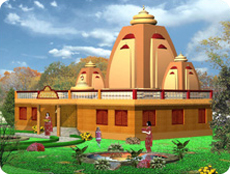
In olden times, rich and wealthy persons had been materialising such plans under the culture and religious activities in our country. In modern period also educational institutions Dharamashala, Rain Basera (overnight camp), water hut, temple, etc. are constructed and are managed for the benefit of common people by donors and wealthy persons in the society. Welfare of all is possible only when every one in this world bears the responsibility of carrying on the business of the world by his good deeds thinking the supremacy of the creator of this world in himself.
Objective of the man in this life is not only the welfare of himself and the family, but also everyone has to earn reward for good deeds (Punya) such as construction of temple etc. for which he receives in return fame and growth of family; other people also get inspiration from such noble deeds for benevolence.
There are so many ways of benevolent deeds. Construction of temple, well or ponds for drinking water for the public, Dharamshala etc. are some important deeds. Vastu Shastra has described the importance and types of such works.
Those who get a temple constructed at a beautiful site, where there are lush gardens and sufficient water in wells, ponds etc. for the sake of enhancement of religion and fame, will definitely gain heavenly pleasure. The land of construction of a temple should be tested; only such land is good and auspicious for construction of a house; selection should therefore be made as per directives given for selection of site elsewhere in this book.
For construction of temple, Vaastu-pad of sixty four squares should be made. Main gates should be constructed in the centre of all the four sides, which is auspicious. Half of the breadth should be kept for the Garbhgriha (Central room where idol is to be placed). All round the Grabhagrih, on hath (cubit) wide path should be provided for circumambulation (Parikrama) and then the wall be constructed around it. One fourth of the breadth of Garbhgrih should be the width of the door. Height of the door should be twice the width of door. The temple or place of worship should be in the north-east portion of the building. This is the best direction for worship and prayers according to Vastu Shastra. Though all the directions are good and auspicious by the grace and kindness of the supreme God, but self-satisfaction and spiritual peace is obtained only from prayers offered in the north-east direction.
In south India even today we find the live proofs of temples constructed as per principles of Vaastu Shastra. These are strictly in conformity with the principles laid down in Indian culture and Vaastu Shastra. Buildings which have been constructed after proper auspiciousness of the land etc. are famous and popular throughout the world.
Takshshila University, Mohenjodaro, Taj Mahal, Several palaces and temples in India have a prominent place in the art of Vaastu not only in India, but in the whole world.
In South the Tirupati Balaji temple, Rameshwaram temple, Meenakshi temple in Madurai, Vivekanand memorial in Kanyakumari, Jagannath temple in Puri, Badrikasram in the north, Kamakshyadevi temple in Assam, Vishwanath temple in Varanasi, are some such places where people feel mental and spiritual peace as desired.
Whether it be a temple of a well, pond etc. or a house, it is the proper selection of land and direction etc. and construction at proper and auspicious time (muhurt) according to the principles of Vaastu Shastra, that it's fame spreads far and wide even after thousands of years have passed. Those buildings which have become by Vaastu-Shanti and Vaastu Pooja. It is good and auspicious to do so, as it will remove default regarding Vaastu if any from that building.
North-East direction is very important in the construction of a building. This direction should be very well considered. No large and heavy rooms or materials should be kept in this portion. The owners cannot progress if they do so, nor can the inmates develop and flourish. If this portion is extended outwards and open, it provides all happiness, mental and spiritual peace prosperity and progress.
North-East direction is best for offering prayers to God, so temple or Pooja room should be made in this direction and it is auspicious to offer prayers and worships sitting face towards east or north.
Dakshinayan and Uttarayan must be considered for consecration of idols. It is auspicious to establish and consecrating the idols of Shiva ling in the month of Shravan, of goddess Durga (Bhagwati Jagadamba) in Ashwin, and lord Vishnu in Margshirsh. Gods having hot temper, such as Bhairav, Narsingh, and Mahishasur Mardini Durga should be established and consecrated in the period of Dakshinayan and those of calm noble temper in the period of Uttarayan. The day, date (tithi), Paksh (fortnight), constellation, Lagna etc. should also be considered for the purpose.
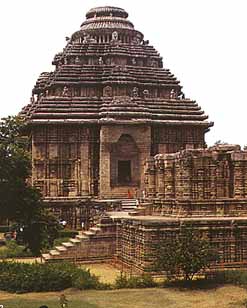
Religious Vaastu - Temples
- We find that in many ancient temples these rules are observed. That is why people have faith in those places. They are considered potent by devotees and they make sacred vows at these places and find that there vows are fulfilled. These effects are observed to a lesser degree in some other temples.
- The slope of the land surrounding the temple in the east and the north direction should be in the north-east corner.
- The priest should not live in any of the rooms in the temple complex. He should live outside the temple premises otherwise, he will have to face a lot of difficulties.
- The sanctuary, the height of the idol, kind of stone of which the idol is made and its colour, the height of the lap from the ground on which the idol is placed, the height of the pinnacle and the metal used for the pinnacle, the height of the discourse hall, number of pillars used for this hall, their colours etc. should be carefully studied from the viewpoint of Vastushastra.
- The height of the discourse hall in from of the temples should be less than the height of the main temple. The stage should be to the west of the hall.
- Fountains or lotus ponds in front of the temple should be in the north-east direction.
- Before entering the temple premises, on the south side, there should be an arrangement for keeping shoes and to the east arrangements should be made for water to drink and to wash the feet and hands etc. The bathrooms should be in the east. Toilets should be outside the temple premises.
- In front of the idol, outside the temple, on the left side the victory tower should be situated. It should not be in the north-east direction. Deepstambha (pillar for light), Agnikund (earthern pot in which the fire is built) and Homkund (Pit for sacred fire) etc. should be in the south-east corner.
- After the construction of the temple is completed with due regards to the favorable constellations, time and day, the idol should be installed. The installation of the idol and the raising of the pinnacle should be done simultaneously. The world famous, wealthy and a place of faith for infinite no of devotees, Tirupati Balaji temple is one of the finest examples of Vastushastra. Different logical arguments and spiritual analysis are made about the Balaji mandir. Tirupati Balaji is an incarnation of Lord Vishnu. There was a clash between Lord Vishnu and Laxmi. As a result Lord Vishnu appeared in his new incarnation as Tirupati Balaji at Tirumala Hills in Andhra Pradesh. Laxmi appeared at Mahalaxmi in Kolhapur in Maharashtra. Balaji married with Goddess Padmavati. At this time Varahswami was the Guru of Tirupati Balaji. The marriage of Tirupati Balaji was a very expensive affair. At that time Balaji took a big loan from Kuber. For paying off this debt, infinite number of devotees of Balaji are making their contribution in the pot placed at Kubersthan in the northern direction of the temple in the form of cash, gold and other valuables. Bajaj on his part for paying of the debt of these devotees helps them in the prosperity of their business.
- If the temple premises there are smaller temples of other Gods, only the temple of Lord Hanuman & the Goddess Kali can have face towards the south.
- No parking arrangement should be made in the temple premises. It should be out side the temple in the east or the north side.
- There should be no fan in the sanctuary of the idol. This spoils the magnetic environment.
- For building religious Vastu temple, first of all, it is necessary to choose the proper site.
- The plot of the temple should be square of rectangular in shape. The magnetic north-south poles of the plot should be parallel. This means that the four major directions, the east, the west, the north and the south should meet the plot parallely and not in the corner.
- Compound wall around the temple in all the four directions is very essential. Entrance gate on the east side of the compound wall is the best. Entrance gate on the north side is tolerable. It is very auspicious to have four entrance gates to the main temple building. At least one in the east and one in the north if there are two gates and if there is only one it should be in the east. Only it should not be in the south direction. The main entrance gate should be taller than other doors and should be decorated.
- The sight of the principal idols stare in the temple should be trained on the seventh part of the door if the door is divided into nine parts. No building, office, electric pole, tree, shed etc. should come from the idol’s stare. There can be entrance gate or road in this direction.
- The orchestra should be in the north-west direction of the hall. The colour of the pillars and the flooring of the hall should be white, yellow or light saffron.
- There should be a window to the east of the sanctuary such that sunrays fall unobtrusively on the idol from 6 a.m. to 9 a.m. There should be no room behind the sanctuary. There should be arrangement for circumambulation around the temple and the sanctuary.
- There should be no place for breaking coconuts in the sanctuary. Water from the coconut should not be sprinkled on the idol. The place for breaking the coconut should be outside the temple in the east or the north leaving the north-east corner.
- The sanctuary of the main God should be at a higher level from the ground. The devotees should not touch the idol. No one except the Pujari (Worshipper of idol) should enter the main octagonal part of the sanctuary.
- If such places are situated on a tall hill or mountain, the population is thin. This helps in maintaining the austerity of the God. The shadow of the temple should not fall on other buildings. In front of the temple there should be no building of any type. These objectives are fulfilled on a hill or mountain.
- Marriage ceremony and any other ceremony should not be performed in the temple premises. If at all they are performed, it should be in the open space around the temple in the west or in the south side.
- By dividing this place into four equal parts the main structure of the temple with Subhamandap (lecture-hall) should be in the south-west part. Godowns and shops should be in the north-west part, Water storage tanks, wells etc. should be in the north-east part, Kitchen, rest houses etc. should be in the south-east portion.
- In the open space surrounding the temple Basil plant with raised bed should be in the east, Jasmine, White Champak, Star Coral plants etc. should be in the north-west corner or the east. Four approach roads are very useful. Charity boxes or pots in the temple should be in the east or the north. The divine gift place should be in the east or the north-east.
- The bell should not be in the sanctuary. It should be outside the sanctuary. There should be no microphones, speakers or any other electrical equipment in the sanctuary. They can be outside the sanctuary. Around the chief idol in the sanctuary there should be square, rectangular octagonal or circular construction or pillars. The pillars or the construction should not be hexagonal.
- If there is a sea, river, tank, take etc. in the east or the north direction, such a plot is, the best place. Because of this, there is natural slope in the east or the north directions.
Er. Rameshwar Prasad invites you to the Wonderful World of Vastu Shastra
Engineer Rameshwar Prasad(B.Tech., M.Tech., P.G.D.C.A., P.G.D.M.) Vaastu International
|