ASTROLOGY
Shodashavarga
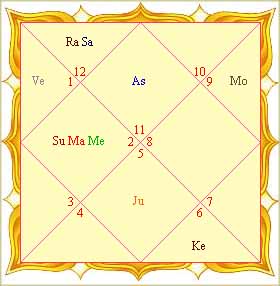
Harmonic Charts (Vargas) In Jyotish
In Hindu astrology the horoscope may be broken down into several vargas, or divisions. Although as many as 16 basic divisional (Shodashavarga) charts exist. The birth chart, divides the zodiac into 12 equal portions of 30 degrees each. The natal chart is the most fundamental chart in analysing an individual or event as it reveals the basic tendencies inherent at a particular time.
There are other ways of dividing the zodiac, and these are represented in the vargas, or harmonic charts, of Jyotish. There are 16 vargas defined in the Brihat Hora Shastra (one of the basic references of Vedic Astrology) of Parasra (the founder of Vedic Astrology). Each varga has a particular method of construction based upon the fundamental, or birth chart, varga, and relates to a specific aspect of life. Most astrologers only concern themselves with the navamsha or 1/9 division.
For example, the Navamsah varga is considered the most important varga after the main natal chart as it provides insight into the moral and spiritual nature of an individual.
The 16 vargas (Shodashavarga) of Parasara and their meaning are listed below (the numbers in brackets indicate the harmonic degree, or the number of divisions each sign is broken into) :
| 1. | Rasi | (1st Varga): | Fundamental chart for basic indications |
| 2. | Hora | (2nd Varga): | Wealth, Masculine/Feminine Tendencie |
| 3. | Drekkana | (3rd Varga): | Siblings, Success through own efforts |
| 4. | Chaturthamsa | (4th Varga): | Fortunes, Well-being, Happiness, Emotion |
| 5. | Trimsamsa | (5th Varga): | Dangers, Misfortune, Health problems, Enmity |
| 6. | Saptamamsa | (7th Varga): | Children, Creative energy |
| 7. | Nadiamsa | (9th Varga): | Moral character, Ethics, Higher knowledge |
| 8. | Dasamsa | (10th Varga): | Power, Position, Livelihood, Achievements |
| 9. | Dwadasamsa | (12th Varga): | Karma, Parents, Subconscious mind, Heredity |
| 10. | Shodasamsa | (16th Varga): | Property, Conveyances, Home |
| 11. | Vimsamsa | (20th Varga): | Spiritual Progress, Capacity for devotion, Religion |
| 12. | Siddhamsa | (24th Varga): | Educational achievements, Spiritual knowledge |
| 13. | Bhamsa | (27th Varga): | Strengths/Weaknesses |
| 14. | Chatvarimsamsa | (40th Varga): | Auspicious/Inauspicious effects, Good/Bad habits |
| 15. | Aksha Vedamsa | (45th Varga): | General indications, Moral and ethical nature |
| 16. | Shashtiamsa | (60th Varga): | Fine-tuning of graha influences |
How to use the Varga Charts
Vargas which divide signs into 12 or less parts provide insight into the areas of life given by the bhava (house) which is equal to the number of divisions. For example, the Navamsa (harmonic 9th) provides insights similar to the 9th bhava, such as moral, ethical, and religious character. The Hora (harmonic 2nd) relates to wealth, similar to the 2nd bhava.
A simple way to begin using the vargas is to look at the disposition of the lagna (ascendant) ruler. For example, if in the Drekkana (harmonic 3rd), the lagna is Aries and Mars (the ruler of Aries) is in the 12th bhava (house of loss, foreign associations), it may indicate a lack of success in one's own efforts or loss due to foreign influences.
Another use of the vargas is for birth time rectification. In order to predict the future, it is first necessary to predict the past in order to validate the correctness of the birth time. If the indications of the chart and the actual life events do not agree, then it is necessary to rectify the birth time to match the birth chart to the individual. As the birth time is modified to bring the birth chart into agreement with one's life history, the varga charts will also change. If the timing of an important event (such as starting a partnership) is known, then the birth time can be modified to bring a particular varga chart into agreement with this event. Since the vargas are constructed by dividing signs into a certain number of parts, the varga charts change much quicker than the birth chart.
For example, in the birth chart the lagna changes sign once every 2 hours, on the average. In Drekkana (3rd harmonic) the lagna changes every 40 minutes. For Navamsa, the lagna changes every 13 minutes. For the Nadiamsa, the finest division of the zodiac (150/sign or 1,800 total), the lagna changes every 48 seconds, on the average. The more events that are known, the more information that is available to determine accurate birth times. This is not a particularly easy process to go through, but it is necessary when accurate birth times are not available.
Er. Rameshwar Prasad invites you to the Wonderful World of Indian Astrology.
Engineer Rameshwar Prasad(B.Tech., M.Tech., P.G.D.C.A., P.G.D.M.) Vaastu International
|