ASTROLOGY
Nakshatras
FOR ASTROLOGICAL BABY NAMES BASED ON NAKSHATRA - CLICK HERE
Moon's Nakshatra and Vedic Moon (Rashi) Calculator
|

How To Use The Nakshatra Calculator?
Here is a step by step procedure with an example for better understanding:
Step 1. Enter the details:
Date of birth: 01-01-2001 (mm-dd-yyyy)
Time of birth: 1:10 AM (Hrs:Mins)
Country: India (You can Select Country)
Note: Select the daylight savings option if applicable to your country.
Step 2. Click on ‘Calculate to Know the Results’.
Step 3. The horoscope results will appear as follows:
Vedic Moon sign / Rasi : Tula
Moon's Nakshatra / Birth star : Swati
Dasha after Birth – Mars
Current Dasha – Sat
Rashi Reading – Pisces
Step 4. For this nakshatra, you can choose names starting with the syllables, Ru, Roo, Re, Ro, Ta and Taa
Renu, Rohit, Rupali, Tanvi, Roopak, Taara are some of the examples.
If you already know your child’s birth star, check the syllable chart next to pick the ideal name.
What are Nakshatras?
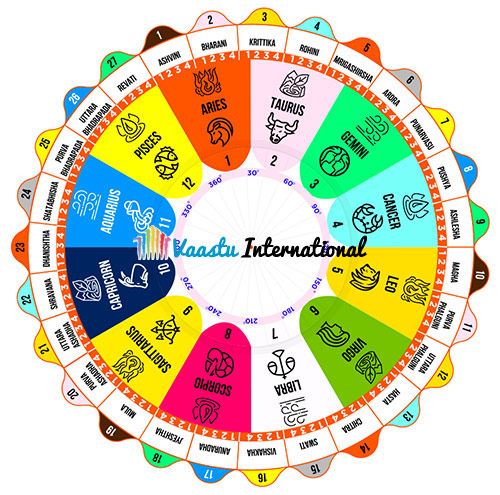
Nakshatras or the birth stars are constellations that play a vital role in the Indian Vedic astrology. There are 28 nakshatras in all, but only 27 of them are considered for calculations.
The Nakshtras, also called lunar mansions or constellations. In Jyotish or Indian astrology there are 27-nakshatras prescribed by Parasara (ancient sage who founded Vedic astrology).
The first nakshatra, Ashwini, starts at Aries 0’00’’ degrees and ends at Aries 13’30’’.
The next nakshatra, Bharani, starts at Aries 13’20’’ and ends at Aries 26’40’’.
Then Krittika starts at Aries 26’40’’ and ends at Taurus 10’00’’.
Then Rohini from Taurus 10’00’’ to 23’20’’ and so on, until Revati, which extends from Pisces 16’40’’ to Aries 0’00’’
Two nakshatras take up 26’40’’, which is 3’20’’ short of one full sign ( a full sign is 30’00’). Therefore, 3’20’’ is 1/4 of a nakshatra, and is called a nakshatra-pada, or simply a pada(means step). As such, Aries contains Ashwini, Bharani, and the 1st pada of Bharani. Taurus contains padas 2 - 4 of Krittika, Rohini, and the first 2 padas of Mrgasira. Each nakshatra therefore contains 9 padas (note that 3’20’’ x 9 = 30 degrees, or one full sign).
The notation Ashwini - 1 means the 1st pada of Ashwini, Ashwini - 2 the 2nd pada, and so on. Aries then contains Ashwini, Bharani, and Krittika - 1, and Taurus contains Krittika - 2, 3, 4, Rohini, and Mgrasira - 1, 2.
Four signs contain 9 x 4 = 36 padas, or 9 full nakshatras. This happens 3 times, as indicated by the breaks in the nakshatra table below. Aries - Cancer contain Ashwini - Ashlesha, Leo - Scorpio contain Magha - Jyeshta, and Sagittarius - Pisces contain Mula - Revati.
Just like the signs, each nakshatra has a ruler or owner. Unlike the signs, Rahu and Ketu are assigned rulerships. Ashwini is ruled by Ketu, Bharani by Venus, Krittika by Sun, then Mars, Rahu, Jupiter, Saturn, and Mercury. The cycle then repeats in the same order two more times. Note the order of nakshatra rulership is the same as the mahadasa order in the vimshottari dasha scheme, as it must be, since this is how the vimshottari dasha order is defined.
Nakshatra calculator helps you find your birth star and other relevant astrological information using your date, place (country) and time of birth.
What Is Nakshatra And Pada In Vedic Astrology?
The term Nakshatra is made of two Sanskrit words, naksha and tra. ‘Naksha’ means to approach, and ‘tra’ means to guard.
Therefore, each nakshatra is a home of the God assigned to the duties of guarding and guiding the cosmic and solar evolution. Some also break it up as naks referring to the sky and shetra referring to the area or region, so together it means a specific area of the sky.
Based on Vedic concepts, the ecliptic sky contains 27 equal reference points, each one a nakshatra. The moon is believed to travel across one reference point in a single day. So, the moon’s revolution divided by 27 divisions of the nakshatra gives you the arc of each nakshatra, which is measured as 360/27 = 13.33′. An arc is measured in degrees (°) and minutes (′).
Each nakshatra is divided into four padas or charanas, i.e., 13.33′/4=3.33′. Therefore, a pada is 1/4th of the nakshatra.
Why & How People Name Their Children According To The Nakshatra Pada Syllables?
It is believed that every child’s birth is ruled by a particular nakshatra, which also determines the first letter of the baby’s name.
Depending on the nakshatra that the baby is born in, you may be recommended a few lucky syllables that the name can start with.
The nakshatra that the moon is present in at the time of your baby’s birth will present four possible syllables or sounds. You can choose one sound out of the four and select a name starting with it. Once you pick a syllable, you can also use numerology to pick a name that brings luck.
Note: This is not a rule but might suit those who believe in astrology, numerology and such.
Nakshatra Syllable Chart
The below table gives you the syllables to begin your baby’s name with, based on his or her birth star.
Note that these are only the phonetic sounds of the actual syllables and not the exact spellings. So chances are you may get a name with the same phonetic sound but a different spelling.
| Birth star | Suggested letters |
|---|---|
| Ashwini (Awasthi, Aswini) | Chu, Che, Cho, Choo, La, Laa |
| Bharani | Li, Lu, Le, Lo, Lee |
| Krittika (Karthikai, Krithika) | Aa, Ae, E, Ee, Ai, A, I, Oo, U |
| Rohini | O, Va, Vaa, Vi, Vee, Wa, Wu |
| Mrigashira (Makayiram, Mrigasira) | Ve, Vo, Ka, Kaa, Ki, Kee, We, Wo |
| Ardra (Arudra, Thiruvadhirai) | Ku, Kam, Ja, Cha, Gha, Da, Na, Jha |
| Punarvasu (Punartham, Punarpoosam) | Ke, Kay, Ko, Ha, Hi, Hee |
| Pushya (Pooyam, Pushyami) | Hu, He, Ho, Da |
| Aslesha (Aayilyam) | Di, Du, De, Do, Dee, Me, Da |
| Magha (Makha, Makam) | Ma, Maa, Mi, Mee, Mu, Me |
| Purva Phalguni (Pooram, Pubba) | Mo, Ta, Taa, Ti, Tee, Tu |
| Uttara Phalguni (Uthiram, Utram) | Te, Ta, Taa, To, Pa, Paa, Pi, Pee |
| Hastha (Atham, Hastam) | Pu, Sha, Shaa, Na, Poo, Tha |
| Chitra (Chitta Chithira) | Pe, Po, Ra, Raa, Ri, Ree |
| Swathi (Chothy, Chothi) | Ru, Re, Ro, Roo, Ta, Taa |
| Visakha (Vishakam) | Ti, Tee, Too, Te, Tu, Tae, To |
| Anuradha (Anizham, Anusham) | Na, Naa, Ni, Nu, Ne, Nee, Noo, Nae |
| Jyeshta (Triketta) | No, Ya, Yaa, Yi, Yu |
| Moola (Moolam, Mula) | Ye, Yu, Ba, Bi, Yo, Bhi, Bha, Bhaa, Bhee |
| Poorvashada (Pooradham, Purvashada) | Bu, Da, Bhoo, Pha, Dha, Fa |
| Utharashada (Utharadam) | Be, Bo, Ja, Ji, Bha, Bhe, Bho, Jaa, Jee |
| Sravana (Shravana, Thiruvonam) | Ju, Je, Jo, Khi, So, Khu, Khe, Kho |
| Dhanishta (Avittam) | Ga, Gi, Gu, Ge, Gee |
| Satabhisha (Shatabhisham, Chathayam) | Go, Sa, Saa, Si, Su, Soo, See, Gau |
| Poorvabhadrapada (Purvabhadra, Pururuttathy) | Se, So, Dha, Dhi, Di, Da, Daa, Dee |
| Uttarabhadrapada (Uthrittathy) | Du, Tha, Jha, Na, Gna, Jna, Da, Gy |
| Revathi | De, Do, Cha, Chaa, Chi, Chee |
How Nakshatra, Pada, And Rashi Are Related?
The Vedic zodiac comprises 360°, occupied by 27 nakshatras (stars or constellations). Each nakshatra occupies 13° 20′ (360/27).
Moreover, each nakshatra comprises four padas, which is a total of 108 padas (27×4) with each pada occupying 3° and 20′ (360/108).
There are 12 zodiac signs or rashis, and each sign occupies 30° (360/12). Each rashi has 2 ¼ nakshatras and 9 padas. Each pada represents a rashi of the zodiac in a group of three nakshatras.
What Is The Significance Of A Birth Rashi (Moon Sign) In Astrology?
The birth rashi is the sign in which the moon is located at the time of the individual’s birth. It plays a significant role in determining the characteristics and predicting the everyday life of a person.
In general, it is the representation of your karma, which is otherwise known as horoscope, jathaka or kundali.
Characteristics Of Each Nakshatra
Next is an overview of the characteristics of the individuals born under different nakshatras:
1. Ashwini Nakshatra
- The longitude ranges between 0° and 13° 20′ Aries in the zodiac.
- The birth name should begin with the syllables Chu, Che, Cho, La.
Positive traits: They are lovable, charming, intelligent, well-brought-up and wealthy. They love to speak the truth, to remain happy and behave respectfully, and maintain an amicable relationship with family, friends, and others. The child will show aspirations after 20.
Negative traits: They can be impulsive, stubborn, aggressive, over passionate, desire to do things on their own, and get disappointed easily if things do not go as planned.
2. Bharani Nakshatra
- Longitude ranges between 13° 20′ and 26° 40′ Aries in the zodiac.
- The birth name should begin with the syllables Li, Lu, Le, Lo.
Positive traits: They have high ambitions, are dutiful, spontaneous, courageous, loyal to family and friends, talented in career, creative and artistic.
Negative traits: They can be overburdened, restless, fickle minded, stubborn, vulnerable, amoral, impatient, irritable, don’t pace themselves, vane, sexually indulgent, judgmental and moralists.
3. Krittika Nakshatra
- Longitude ranges between 26° 40′ Aries and 10° Taurus in the zodiac.
- The birth name should begin with the syllables Aa, Ee, U, A.
Positive traits: They have a pleasant personality, good looks, many possessions and acquire a strong appetite. They are self-motivated, goal-oriented, dignified, good leaders, courageous, confident and straight-forward.
Negative traits: They possess poor money management skills, and relationships with others seem untrustworthy and unstable. They can be stubborn, impatient, aggressive, and nervous, and may find difficulty with eating. Sometimes, they are childish.
4. Rohini Nakshatra
- Longitude ranges between 10° and 23° 20′ Taurus in the zodiac.
- The birth name should begin with the syllables O, Va, Vee, Vo.
Positive traits: They are ingenious, intelligent, charismatic, attractive, healthy, comforting, truthful, smooth talkers, gentle-mannered, and dutiful. They do well in finances and love to solve puzzles.
Negative traits: They may be materialistic, indulgent, and deceptive, critical of others, overly sensitive, jealous, indecisive and addictive.
5. Mrigashira Nakshatra
- Longitude ranges between 23° 20′ Taurus and 6° 40′ Gemini in the zodiac.
- The birth name should begin with the syllables Vay, Vo, Kaa, Ke.
Positive traits: They easily win over war-related strategies, are respectful towards others, natural leaders, curious, creative, talented, friendly, sensual, and affluent. They seek knowledge, gain pleasures in life, have a strong individuality, enjoy debates, singing, and writing, and are hard workers.
Negative traits: They may be impulsive, crave sensation, fickle, critical, helpless, unbalanced and sensitive to criticism, and require constant attention.
6. Ardra Nakshatra
- Longitude ranges between 6° 40′ and 20° Gemini in the zodiac.
- The birth name should begin with the syllables Koo, Ghaa, Jna, Cha.
Positive traits: They are intelligent, quick in action, hungry for knowledge, truthful, and compassionate towards others. They love to do physical work, easily get support from authorities or government, will become successful after 25.
Negative traits: They may be ungrateful, arrogant, reckless, anti-social, self-serving, mischievous, stubborn, impolite, bad at financial planning, highly indulgent, violent, and cause pain to others. They lust for materialistic things.
7. Punarvasu Nakshatra
- Longitude ranges between 20° Gemini and 3° 20′ Cancer in the zodiac.
- The birth name should begin with the syllables Kay, Ko, Haa, Hee.
Positive traits: They are gentle-natured, soft-hearted, easily contented, friendly, simplistic, generous, interested in philosophies and spiritual writings. They can be inspiring speakers, best writers, connect with others and gain success after 24.
Negative traits: They may lack intelligence, get ill and bored frequently, lack of foresight that leads to unstable relationships and multiple job changes. They are also fickle-minded.
8. Pushya Nakshatra
- Longitude ranges between 3° 20′ and 16° 40′ Cancer in the zodiac.
- The birth name should begin with the syllables Hoo, Hay, Ho, Daa.
Positive traits: They can control their desires, are broad-minded, helpful in nature, religious, brilliant, well-educated, good public servants and advisers, independent, socially adept, respected, selfless, defensive and passionate. They find success after 35.
Negative traits: They may be arrogant, stubborn, overly sensitive, fundamentalist, doubtful about what others talk of them, and insecure.
9. Aslesha Nakshatra
- Longitude ranges between 16° 40′ and 30° Cancer in the zodiac.
- The birth name should begin with the syllables Dee, Doo, Day, Do.
Positive traits: They are a charm to their family, intelligent, philosophical, independent, learned, entertaining, mystical, and leaders. They are always bringing good luck and gaining benefits from spiritual work. They become successful in life after 33.
Negative traits: They may get attracted to evil things quickly, and have bad relationships with their dear ones and tend to spend time in worthless or wicked endeavors. They are impolite, depressed in nature, reckless, lack appreciation, temperamental, reclusive, disconnected, blunt and ungrateful.
10. Magha Nakshatra
- Longitude ranges between 0° Leo and 13° 20′ Leo in the zodiac.
- The birth name should begin with the syllables Maa, Mee, Moo, May.
Positive traits: They are born intelligent, are wealthy and helpful towards the less fortunate. They live a comfortable life, prosper in business, bond well with the partner and indulge in religious activities. They take great care of the parents, enjoy parties, get praised and are dependable. They find success after 25.
Negative traits: They may be hot-tempered, arrogant, resentful, susceptible to flattery, sensual, hold racial superiority, cruel to those who disrespect them.
11. Purva Phalguni Nakshatra
- Longitude ranges between 13° 20′ and 26° 40′ Leo in the zodiac.
- The birth name should begin with the syllables Mo, Taa, Tee, Too.
Positive traits: They are courageous, broad-minded, soft-spoken, active, intelligent, open-minded, generous, smart enough to win over the enemies, loving, youthful and artistic. They possess leadership qualities and are good spokespersons. They will see success between 33 and 38 years.
Negative traits: They are impulsive, show vanity, narcissistic, spendthrift, reckless, vindictive, lack planning and get depressed if they do not get what they require.
12. Uttara Phalguni Nakshatra
- Longitude ranges between 26° 40′ Leo and 10° Virgo in the zodiac.
- The birth name should begin with the syllables Tay, To, Paa, Pee.
Positive traits: They are mild-mannered, calm, well-behaved and sympathetic, focused, reliable, liberal but with fixed principles, fortunate, happy, compassionate and achieve mental and spiritual advancements. They flourish in life with hard work, gain the love of everyone, and find luck in between 28 and 31 years of age.
Negative traits: They may be restless, promiscuous, inconsiderate of others’ feelings, bossy, obstinate, stubborn, arrogant, lack belief in oneself and resentful.
13. Hastha Nakshatra
- Longitude ranges between 10° Virgo and 23° 20′ Virgo in the zodiac.
- The birth name should begin with the syllables Pu, Shaa, Naa, Thaa.
Positive traits: They are liberal, wise, humorous, pleasant, attractive, generous, cordial, self-motivated, promote own interests, find opportunities in foreign lands, determined and skillful. They gain admiration from everyone, can become successful around 30 to 32 years.
Negative traits: They might be restless, emotionally unsettled, mistrustful, nasty, overly indulge in pleasures, abuse alcohol, drugs, and have health issues.
14. Chitra Nakshatra
- Longitude ranges between 23° 20′ Virgo and 6° 40′ Libra in the zodiac.
- The birth name should begin with the syllables Pay, Po, Raa, Ree.
Positive traits: They are artistic, independent, attractive, highly-spirited, conversant, elegant, wealthy, intelligent, dress and groom well, do well in a foreign land, inclined towards arts of printmaking, sculpture and are skillful designers. They will find success in between 30 and 35 years of age.
Negative traits: They might be self-centered, easily bored, conceited, quarrelsome, corrupt, critical, immoral and have little focus on saving money.
15. Swathi Nakshatra
- Longitude ranges between 6° 40′ and 20° Libra in the zodiac.
- The birth name should begin with the syllables Ru, Ray, Raa, Tha.
Positive traits: They hold good morals, do well in the business of trade and commerce, think before acting, care for others, like to be in the company of well integrated and religious people. They are independent, tender, truthful, meek, accurate, uncorrupted, disciplined, and are travelers. They are successful around 30 and 35.
Negative traits: They have no limitations, which could lead to loss of status, respect, and money. They can be spendthrifts, restless, self-isolated, and secretive. They tend to give no importance to family, hide their passions and be hot-tempered.
16. Visakha Nakshatra
- Longitude ranges between 20° Libra and 3° 20′ Scorpio in the zodiac.
- The birth name should begin with the syllables Thee, Thoo, Thay, Tho.
Positive traits: They are religious, intelligent, self-satisfied, humanitarian, truthful, courageous, and determined. They have a bright appearance, show respect to spiritual and intelligent people, possess leadership qualities, benefit through traveling and marriage, and have talent in mathematics. They powerfully achieve success at around 21, 28 and 34 ages.
Negative traits: They might be harmful, overly talkative, restless, find faults in others, too ambitious, manipulate easily to meet their needs, deceitful, jealous, greedy of others’ success, possessive and indulge in way too many interests.
17. Anuradha Nakshatra
- Longitude ranges between 3° 20′ Scorpio and 16° 40′ Scorpio in the zodiac.
- The birth name should begin with the syllables Naa, Nee, Noo, Nay.
Positive traits: They are well-educated, fun-loving, wise, vigorous, attractive, devoted, spiritual seekers, healthy, enjoy traveling and social life, maintain friendships and cooperate with others. They get success after 39.
Negative traits: They might be deceitful, cannot handle hunger or thirst, rebellious, emotionally needy, jealous, melancholic due to lack of maternal nurturing, and try hard at progressing spiritually.
18. Jyeshta Nakshatra
- Longitude ranges between 16° 40′ Scorpio and 30° Scorpio in the zodiac.
- The birth name should begin with the syllables No, Yaa, Yee, Yoo.
Positive traits: They behave well with everyone, are soft-hearted, gentle, always in the good books of others, most successful in their family, passionate about love, take control, virtuous, generous, get things done quickly, interested in the occult and talented in music and creative designing.
Negative traits: They might have family issues, hide their feelings, immoral, possessive, gain control over others, change job frequently, tormented, troubled early in life, secretive behavior and hypocritical.
19. Moola Nakshatra
- Longitude ranges between 0° and 13° 20′ Saggitarius in the zodiac.
- The birth name should begin with the syllables Yay, Yo, Baa, Bee.
Positive traits: They are born wealthy, cheerful, good-looking, broad-minded, clever, and skillful in serving others. They enjoy a good fortune, live a comfortable life, are determined, successful, peace-loving, brave, adventurous, and hold a fortune in foreign lands. They will find success in between 27 and 31 years.
Negative traits: They might be insecure, arrogant, headstrong, have affairs, low-tolerance for boredom, indecisive, fickle in holding relationships, selfish, filled with anger and lust.
20. Poorvashada Nakshatra
- Longitude ranges between 13° 20′ Saggitarius and 26° 40′ Saggitarius in the zodiac.
- The birth name should begin with the syllables Bu, Dhaa, Bha, Dha.
Positive traits: They are intelligent, artistic, well-liked, good-looking, faithful, supportive, humble, influential and changeable. They lead a simple life, can be good managers, have a good bonding with their partner, love eating, and can have many children. They are successful at 28.
Negative traits: They might be inflexible, egotistical, angry, obstinate and dictatorial. Others regard them as immature and cruel, and they lack in education and are not open to advise.
21. Uttarashada Nakshatra
- Longitude ranges between 26° 40′ Saggitarius and 10° Capricorn in the zodiac.
- The birth name should begin with the syllables Bay, Bo, Jaa, Jee.
Positive traits: They are sincere, dutiful, friendly, helpful, grateful, devoted to friends and possess ingenious ideas that can help in any given situations. They have rich friends, gain the favor from their bosses, hold good qualities, enjoy reading to gain knowledge, have leadership traits and benefit through traveling. They are also interested in dance and music and notice success after 31.
Negative traits: They might have multiple relationships, are obstinate, self-indulgent, self-centered, overly anxious, apathetic, early adversity in life and fail to complete what they begin.
22. Sravana Nakshatra
- Longitude ranges between 10° and 23° 20′ Capricorn in the zodiac.
- The birth name should begin with the syllables Ju, Jay, Jo, Gha.
Positive traits: They are highly intelligent, well-educated, talented in the areas of music, astrology, and mathematics, powerful, have strong intuition, get a generous partner, help others in transforming their lives, creative, gain fame in the world, kind, quick learners and charitable. They see success at 9 and 24.
Negative traits: They might be overly open-minded, hypersensitive, gossip-mongers and jealous. Their extreme views can create adversaries.
23. Dhanishta Nakshatra
- Longitude ranges between 23° 20′ Capricorn and 6° 40′ Aquarius in the zodiac.
- The birth name should begin with the syllables Gaa, Gee, Goo, Gay.
Positive traits: They are brave, with a generous mind and good wealth. Their love of family and siblings is enormous, they do well in foreign lands, enjoy dance and music, are ambitious and charitable, have good organizational abilities, are skilled at astrology, like old and mystifying things. They will find success at 15, 23 and 29 years.
Negative traits: They might be inconsiderate, worried, ruthless, aggressive, too talkative, argumentative, careless, narcissistic, and envious of others’ success. They lie, make up stories, hurt others, lust for materialistic things, and may have sexual problems.
24. Satabhisha Nakshatra
- Longitude ranges between 6° 40′ and 20° Aquarius in the zodiac.
- The birth name should begin with the syllables Go, Saa, See, Soo.
Positive traits: They tend to help people in their difficult situations, take care about their welfare, gain respect from others, win over enemies, have power and influence, possess good writing skills, strong principles, and of artistic nature. They are intelligent, independent, generous, and wealthy.
Negative traits: They might be melancholic, feel lonely, lack self-confidence and communications skills, and face problems in relationships. They can also be restricted, argumentative, unstable, miserly, secretive, mentally anguished and stubborn.
25. Poorva Bhadrapada Nakshatra
- Longitude ranges between 20° Aquarius and 3° 20′ Pisces in the zodiac.
- The birth name should begin with the syllables Say, So, Daa, Dee.
Positive traits: They are successful in earning wealth and riches, well-educated, talkative, knowledgeable, passionate, spiritually strong, good speakers, imaginative, good writers and strong. They have universal goals, fight injustice, admire the opposite sex, have a prosperous partner, and kids bring them happiness.
Negative traits:They are cynical, gloomy, worriers, impulsive, angry, dominated by the partner, poor planners, sickly, anxious, wavering mind and over-serious.
26. Uttara Bhadrapada Nakshatra
- Longitude ranges between 3° 20′ and 16° 40′ Pisces in the zodiac.
- The birth name should begin with the syllables Du, Tha, Gya, Da.
Positive traits: They are intelligent, generous, good public speakers, good advisers, charitable, merciful, virtuous, happy, service-oriented, and smart. They possess good qualities, win over enemies, live a prosperous life, have a strong personality, enjoy marital happiness, and control anger.
Negative traits: They are unenthusiastic, self-centered, lazy, gossipers, irresponsible and highly emotional, and get into disputes and develop enemies.
27. Revati Nakshatra
- Longitude ranges between 16° 40′ and 30° Pisces in the zodiac.
- The birth name should begin with the syllables De, Do, Chaa, Chee.
Positive traits: They are intelligent, wealthy, charming, confident, independent, creative thinkers, supportive, sociable, promoted quickly, gifted with arts, well-groomed, protect pets, selfless, interested in ancient cultures, caring and compassionate.
Negative traits: They might be overindulgent, unfriendly, doubt-ridden, amoral, lack of self-esteem, low fertility, volatile, stubborn, lack self-confidence, feel unloved and insecure. Keep reading for answers to common questions about nakshatras.
A table summarizing the nakshatras is given below.
| Nakshatra | Ruler | Start |
| ---------------------------------------------------------------- | ||
| Ashwini | Ketu | Ari 0-00 |
| Bharani | Venus | Ari 13-20 |
| Krittika | Sun | Ari 26-40 |
| Rohini | Moon | Tau 10-00 |
| Mrgasira | Mars | Tau 23-20 |
| Ardra | Rahu | Gem 6-40 |
| Punarvas | Jupiter | Gem 20-00 |
| Pushya | Saturn | Can 3-20 |
| Ashlesha | Mercury | Can 16-40 |
| ---------------------------------------------------------------- | ||
| Magha | Ketu | Leo 0-00 |
| Poorvaphalguni | Venus | Leo 13-20 |
| Uttaraphalguni | Sun | Leo 26-40 |
| Hasta | Moon | Vir 10-00 |
| Chitra | Mars | Vir 23-20 |
| Svati | Rahu | Lib 6-40 |
| Visakha | Jupiter | Lib 20-00 |
| Anuradha | Saturn | Sco 3-20 |
| Jyeshta | Mercury | Sco 16-40 |
| ---------------------------------------------------------------- | ||
| Mula | Ketu | Sag 0-00 |
| Poorvashadha | Venus | Sag 13-2 |
| Uttarashadha | Sun | Sag 26-40 |
| Shravana | Moon | Cap 10-0 |
| Dhanishta | Mars | Cap 23-20 |
| Satabisha | Rahu | Aqu 6-40 |
| Poorva Bhadrapada | Jupiter | Aqu 20-00 |
| Uttara Bhadrapada | Saturn | Pis 3-20 |
| Revati | Mercury | Pis 16-40 |
The nakshatras act as a filter through which the grahas act. Take Sun at Aries 10-00; this corresponds to Ashwini, which is ruled by Ketu. Sun therefore has an influence from Ketu, and we need to look at the disposition of Ketu to fully understand the influence of Sun.
We continually emphasize the word graha here and in other articles in this web site. It is explained there that the word graha means to grasp, or lay hold of. The entity that the grahas are grasping onto are the nakshatras.
When one graha is in a nakshatra ruled by another graha, it acts to integrate the influences of the two grahas. This integration is often important for providing balance. For example, Jupiter is an expansive graha, and this is taken to be "good". On the other hand, too much expansion can result in obesity, or excessive accumulation. Saturn, on the other hand, indicates constriction, and is often considered "bad". When Jupiter and Saturn balance each other it can provide for a very strong foundation which can result in "healthy growth", or growth (expansion) with balance.
Following table will show certain characteristics of 27 Naksharta in Vedic Astrology
| Nakshatra | People and Professions | |
| ----------------------------------------------------------------------------- | ||
| 1. | Aswinni | horse-dealers, commandants, physicians, attendants, horse-riders, merchants, handsome persons, traders, horse-grooms, army general, hunter, astrologers, poets, ministers |
| 2. | Bharani | those that feed on blood + flesh, cruel men, those engaged in killing, imprisoning and beating others, low-born persons, those who are devoid of courage, character or nobility, burial related jobs, menial jobs, dancers, actors, musicians, singers, those who play on musical instruments, the wicked, hunters. |
| 3. | Krittika | Brahmans who maintain and worship the sacred fire daily, those who know of the sacred hymns and sacrificial rules, grammarians, miners, barbers, Brahmans, potters, priests and astrologers, commentators, gold miners, those who work on fire i.e. goldsmiths, blacksmiths etc., army commanders. |
| 4. | Rohini | Observers of vows, merchandises, kings, wealthy persons, Yogins, cart-men, husbandmen, liquor drinkers, men in authority, politicians, entertainers, ascetic. |
| 5. | Mrigashira | drinkers, men in authority, politicians, entertainers, ascetic, foresters (or forest-dwellers), those who partake of Soma juice (in sacrifices), musicians, lovers, carriers of letters, lustful persons, hunters, loafer, singers, sacrificers, officiating priests at sacrifices, noble persons. |
| 6. | Ardra | Murderers (executioners), animal-catchers, liars, adulterers, thieves, rogues, creators of discord, cruel persons, charmers, sorcerers, those well versed in raising goblins, black magic, butchers, fowlers, prostitutes, oil mongers, washermen, dyers |
| 7. | Punurvasu | The truthful, generous, pure (clean), rich, high-born, handsome, intelligent, grain merchants, famous, merchants, servants, artisans, bankers, cave-dwellers. |
| 8. | Pushyami | sacrifice conductor, ministers, kings, fishermen and the like, virtuous men and those that are engaged in big and small sacrifices, those involved in physical exercise, persons engaged in ringing bells, those who make loud announcements (or those who live in hamlets), gamblers. |
| 9. | Aslesha | nurses, robbers, and all classes of physicians, artisans, sorcery. |
| 10. | Magha | People rich in gold and corn, mountaineers, those devoted to parents or the Manes, valiant people, traders, heroes, carnivorous beings, women-haters, civil engineers, traders, godowns, commanders of elephant-divisions or chief ministers. |
| 11. | PurvaPhalguni | Actors, young women, amiable persons, musicians, artists, boys, dancers, fashion, painting, dealers in juices or articles having the six kinds of tastes, courtesans, virgins. |
| 12. | UttaraPhalguni | kind-hearted persons, the pure in conduct, modest, heretics, charitable persons, the learned, very rich men, those who are devoted to their duties, and kings, lawyer, judge, financiers, government/social service, those with Vedic Knowledge, treasurers, hermits (or mendicants), water. |
| 13. | Hasta | thieves, advocates, those who travel in chariots, elephant-drivers, artisans, men learned in the Vedas, traders, men of prowess, speculator, gambling, barbers, potters, oil-manufacturers etc., physicians, tailors (needle-workers), elephant-catchers (or elephants and crocodiles), harlots, garland-makers (florists), painters. |
| 14. | Chitra | persons skilled in making ornaments, dyeing (or painting), writing, singing, perfumery, mathematicians, weavers, jewel examiners, ophthalmic surgeons, architects, interior decorators, labourers engaged in the sinking of wells . |
| 15. | Svati | traders, ascetic, unsteady friends, feeble characters, ascetics and connoisseurs of wares, airplanes, rhapsodists (bards), spies, couriers, charioteers or story-tellers, sailors, actors, musicians, messengers, traders. |
| 16. | Vishaka | men devoted to Indra and Gani, those learned and skilled in handling fire, engineers, merchants. |
| 17. | Anuradha | men of prowess, heads of corporations, friends of the virtuous, lovers of assemblies, tourists (or lovers of carriages), all honest persons in the world, athletes, vehicle repair and sales, ministers, those that work with wheels such as potters, oil-makers etc., those that beat gongs or bell-makers, friends, Kshatriyas. |
| 18. | Jyesta | great battle heroes, those who are noted for pedigree, wealth and fame, thieves, kings intent on conquests and commandants, kings, their preceptors, those that receive royal patronage or honour, leaders of Kshatriyas. |
| 19. | Moola | physicians, leaders of groups, those who deal in flowers, roots and fruits, very wealthy persons, those who live only on fruits and roots, warriors, those who deal in medicinal roots (druggists). |
| 20. | Purva Ashada | tender-hearted people, navigators, wealthy persons, fishermen, the truthful, pure, constructors of bridges/dams/canals, those who live by water, meat seller. |
| 21. | Uttara Ashada | Elephant drivers, wrestlers, devotees of Gods, warriors, persons enjoying pleasures, men of valor, astrologers. |
| 22. | Sravana | jugglers, the ever-active, the efficient, the energetic, the righteous, devotees of Lord Visnu, the truthful, king's officers, eminent Brahmins, physicians, priests. |
| 23. | Dhanishta | Men w/o pride, eunuch, fast friends, men hated by women, women, charitable persons, very wealthy, peaceful, conqueror of senses, treasurers, bankers and the like, heretics. |
| 24. | Shatabishak | Snarers, anglers, bird killers, dealers in fish etc., boar-hunters, hunters, washer-men, distillers and fowlers, physicians, poets, drunkards, traders, politicians. |
| 25. | Purva Bhadra | thieves, cowherds, murderous persons, niggards, those engaged in despicable and roguish activities, those devoid of virtuous or religious observances, those clever in single combat, physicians, poets, drunkards, traders, politicians, gamblers. |
| 26. | Uttara Bhadra | Brahmans, those that are engaged in sacrifices, charity and penance, ascetic, very wealthy persons, recluses, heretics, monarchs, rivers, those who dwell on river-banks, carriage-makers, carpenters etc. |
| 27. | Revati | traders, sailor, helmsmen, king's protégés, travellers and marching troops. |
Note: Those in italic are derived from Brihat Samhita through a study of transit effects, the other indications are directly stated from other works.
Most Frequently Asked Questions
Q. How Can I Get My Child's Nakshatra ?
You will need the time and place of your baby’s birth to find out the nakshatra. This information helps in calculating the position of the moon at the time of birth and thus the nakshatra.
Q. Why Is My Birth Time Significant In Finding Nakshatra ?
The time of birth is essential since the planets are always moving and even a difference of an hour can affect the birth chart. The more accurate your birth time is, the better it is.
Q. What Is The Difference Between Moon Sign (Birth Star) And Sun Sign ?
According to astrology, the sun sign determines your zodiac personality while the moon sign represents your emotions and inner mood. Together, the sun signs and the moon signs are used to read horoscopes and make predictions.
Q. Which Nakshatra Is Good For Baby Birth ?
While the birth star alone cannot determine the good or bad, Uttarabhadrapada, Pushyami, and Punarvasu are the harmless stars and hence preferred.
Kritika and Jyestha offer sharp intelligence but fickle mental attitude. Poorva Phalguni and Poorvashada bring success to the family while Uttara Phalguni provides success to others in your vicinity.
Hastha offers independence while Vishakha offers knowledge.
Er. Rameshwar Prasad invites you to the Wonderful World of Indian Astrology.
Engineer Rameshwar Prasad(B.Tech., M.Tech., P.G.D.C.A., P.G.D.M.) Vaastu International
|